Agriculture is entering a new era where decisions are no longer based on guesswork or tradition alone. Instead, farmers today rely on data, smart tools, sensors, AI, and next-generation fertilizers to grow healthier crops using fewer resources. This modern approach is known as Precision Farming, and it is rapidly transforming how food is grown across the world.
At the same time, Smart Fertilizers are becoming one of the most important innovations in farming. These fertilizers are designed to release nutrients slowly, respond to soil needs, and boost plant health without harming the environment.
Together, precision farming + smart fertilizers offer a complete solution for modern agriculture—higher yields, lower costs, better soil, and long-term sustainability.
Companies like AspaGrow are leading this transformation by bringing farmers advanced tools, organic boosters, and intelligent irrigation systems that make precision agriculture easy and affordable.
Let’s explore how these innovations are shaping the future of farming.

1. What Is Precision Farming?
Precision farming, also known as precision agriculture, is a farming method that uses technology to deliver the right input, at the right time, in the right amount, and in the right place.
It involves:
- Soil sensors
- GPS-guided tools
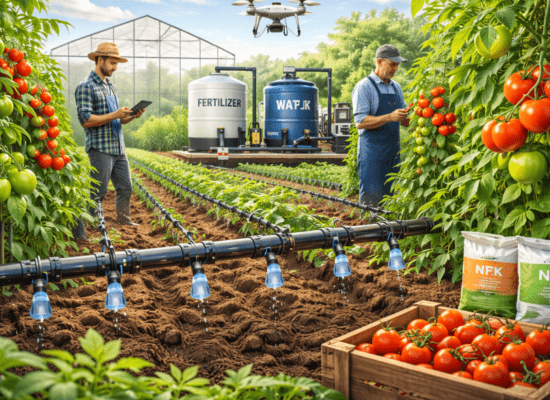
- Drone monitoring
- Smart irrigation
- AI-based crop analysis
- Weather forecasting
- Mobile-based farm management apps
Instead of treating the entire field as one unit, precision farming helps farmers understand exactly what each part of the field needs. This reduces wastage and increases crop quality.
Example:
Instead of applying fertilizer uniformly across 1 acre, precision farming shows which areas actually need more nitrogen and which areas are already sufficient.
This ensures:
- Higher yield
- Lower fertilizer cost
- Better soil health
- Less environmental pollution
2. The Role of Smart Fertilizers in Modern Farming
Traditional fertilizers release nutrients immediately—whether plants need them or not. This leads to wastage, soil damage, nutrient leaching, and lower long-term fertility.
Smart Fertilizers, on the other hand, are advanced formulations that:
- Release nutrients slowly and steadily
- Respond to soil moisture and pH
- Increase nutrient use efficiency
- Reduce losses due to evaporation or washing away
- Improve plant immunity
- Restore soil structure
Types of Smart Fertilizers include:
- Controlled-release fertilizers
- Nano-fertilizers
- Bio-enhanced organic fertilizers
- Water-soluble fertilizers
- Smart nutrient coatings
AspaGrow develops intelligent organic and bio-based fertilizers that enhance microbial activity, increase absorption, and protect the soil ecosystem.
3. How Precision Farming and Smart Fertilizers Work Together
Precision farming tells the farmer exactly what the crop needs, while smart fertilizers ensure that the plant receives nutrients efficiently and safely.
Together, they offer powerful advantages:
a. Higher Nutrient Efficiency
Sensors detect soil nutrient levels, and smart fertilizers deliver only what is required.
This can increase nutrient efficiency by 30–50%.
b. Reduced Input Costs
Farmers avoid overuse of urea or DAP. Smart fertilizers last longer, so fewer doses are needed.
c. Improved Soil Health
Because they do not overload soil with chemicals, smart fertilizers restore microbial life and strengthen root systems.
d. Higher Crop Yield & Quality
Healthy soil + precise inputs = stronger plants and higher productivity.
e. Low Environmental Impact
Precision methods reduce water waste, and smart fertilizers reduce harmful runoff.
4. Key Technologies Behind Precision Farming
Precision agriculture uses several innovations:
1. Smart Sensors
These measure:
- Soil moisture
- Soil nutrient level
- Temperature
- Humidity
- pH
- Pest activity
Farmers can check all this data through mobile apps.
2. Drone Monitoring
Drones scan large fields and detect:
- Weak crop areas
- Nutrient deficiencies
- Water stress
- Disease outbreaks
This early detection saves huge losses.
3. IoT-Based Smart Irrigation
Smart irrigation systems automatically adjust water flow based on soil moisture.
AspaGrow’s irrigation controllers help farmers save up to 40% water.
4. GPS-Enabled Farm Planning
GPS tools help farmers create accurate field maps for fertilizer, seed, and water distribution.
5. AI and Machine Learning
AI predicts:
- Crop yield
- Pest attacks
- Water needs
- Fertilizer requirements
This allows for fast, data-driven decisions.
5. Smart Fertilizers: Types and Benefits
Modern fertilizers are designed to work with the soil—not against it.
a. Controlled-Release Fertilizers
Release nutrients slowly over weeks or months.
b. Nano-Fertilizers
Contain ultra-small particles that increase nutrient absorption.
c. Liquid Bio-Fertilizers
Contain beneficial microbes that improve soil fertility.
d. Water-Soluble Fertilizers
Ideal for drip irrigation and fertigation.
e. Organic Smart Fertilizers
Use natural materials enhanced with enzymes, amino acids, and microbes.
AspaGrow specializes in this category.
Benefits Include:
- Better root growth
- Improved nutrient uptake
- Reduced chemical residue
- Higher resistance to pests
- Better flowering and fruiting
6. Why Farmers Are Switching to Precision Farming
Farmers are adopting precision farming because it solves the problems of traditional agriculture:
Traditional farming:
- Overuse of chemicals
- Unpredictable yields
- Water wastage
- Rising input costs
- Soil degradation
Precision farming:
- Accurate data
- Higher yield
- Lower cost
- Healthy soil
- Efficient water and fertilizer use
With AspaGrow’s low-cost precision tools, even small farmers can adopt modern methods easily.
7. AspaGrow’s Smart Farming Solutions
AspaGrow is helping farmers modernize their fields through:
1. Smart Irrigation Systems
Automated watering based on real-time soil moisture.
2. Bio-Enhanced Smart Fertilizers
Organic and nano-formulated fertilizers that improve crop health.
3. Soil Testing and Diagnostics
Detailed soil reports for customized fertilization plans.
4. Mobile-Based Crop Advisory
Weekly guidance on fertilization, pest control, and irrigation.
5. Yield Prediction Tools
AI-based models help farmers forecast income.
6. Climate-Ready Crop Plans
Tailored solutions for drought, heat, and flood-prone regions.
AspaGrow’s technology is designed to be simple, affordable, and farmer-friendly.
8. The Future of Precision Farming in India
By 2030, India’s agriculture sector will be dominated by:
- Satellite crop mapping
- AI-powered farming
- Robotic weed control
- Smart soil health monitoring
- Organic smart fertilizers
- Digital crop traceability
- Carbon credit farming
Farmers who adopt precision agriculture early will be the most successful.
FAQs | Precision Farming & Smart Fertilizers
Lets have some discusssion
1. What is precision farming and how does it help farmers?
Precision farming uses technology like sensors, drones, and GPS to apply water, fertilizer, and pesticides only where needed. It helps farmers reduce costs, save time, and increase crop yields. AspaGrow provides affordable tools that make precision farming easy even for small landholders.
2. What are smart fertilizers and why are they better?
Smart fertilizers release nutrients slowly and only when plants need them. This reduces nutrient loss, improves soil health, and increases yields. They are more efficient than traditional fertilizers and work well with precision irrigation.
3. Can small farmers afford precision farming?
Yes. With affordable IoT devices, mobile apps, and low-cost sensors from AspaGrow, precision farming is accessible to small and marginal farmers too.
4. How do smart fertilizers improve productivity?
They provide consistent nutrition, strengthen roots, enhance flowering, and improve fruit set. Because nutrients are released slowly, plants absorb more, leading to higher yields.
5. Are precision farming and smart fertilizers good for the environment?
Absolutely. They reduce chemical runoff, prevent soil degradation, save water, and lower greenhouse gas emissions—making farming more sustainable.
Conclusion
The future of agriculture is clear: precision, sustainability, and intelligence.
Precision farming and smart fertilizers are not luxuries—they are the foundation of modern farming.
With advanced technologies from AspaGrow, farmers can now:
- Grow more with fewer inputs
- Protect their soil
- Reduce costs
- Improve quality
- And secure long-term profitability
The future is here—and it belongs to farmers who choose innovation.