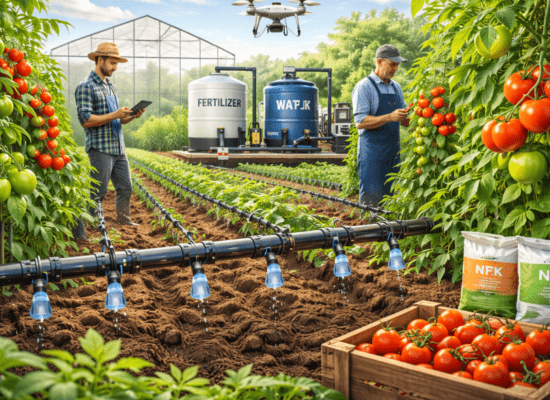
Soil is the real foundation of farming. If the soil is healthy, crops grow stronger, resist disease, and give higher yield. But if soil nutrients are imbalanced, even good seeds and heavy irrigation won’t deliver results. Many farmers apply fertilizers based on guesswork or past habits. Some use extra urea hoping to boost growth. Some add DAP every season without checking soil condition. Over time, this creates nutrient imbalance, poor soil structure, and rising fertilizer cost.
That’s why a Soil Testing Guide is important for every farmer. Soil testing is like a health report of your land. It tells you what nutrients are present, what is missing, and what should be applied to improve crop productivity. At AspaGrow, our goal is to help farmers adopt smart, scientific, and affordable methods of farming, and soil testing is one of the best steps toward that.
In this blog, you will learn how to check soil health, how to do soil testing, and how to choose the right fertilizer based on the soil test report.
What is Soil Testing?
Soil testing is a process of analyzing soil to understand:
- soil pH (acidic or alkaline)
- organic carbon
- major nutrients (N, P, K)
- secondary nutrients (S, Ca, Mg)
- micronutrients (Zn, Fe, Mn, Cu, B)
- salinity and soil texture
A soil test helps farmers avoid overuse of fertilizers and improves long-term fertility. It also supports precision farming and sustainable agriculture.
Why Soil Testing is Important for Farmers
A soil test is not only for large farmers. It is highly useful for small and marginal farmers too because it reduces unnecessary spending.
Key benefits of soil testing:
✅ Helps select best fertilizer for crops
✅ Prevents nutrient deficiency and toxicity
✅ Improves crop yield and quality
✅ Reduces fertilizer costs
✅ Maintains soil fertility long-term
✅ Supports climate-smart agriculture
Many farmers lose yield not because of water shortage or seed quality, but because of hidden nutrient deficiencies (like Zinc or Boron).
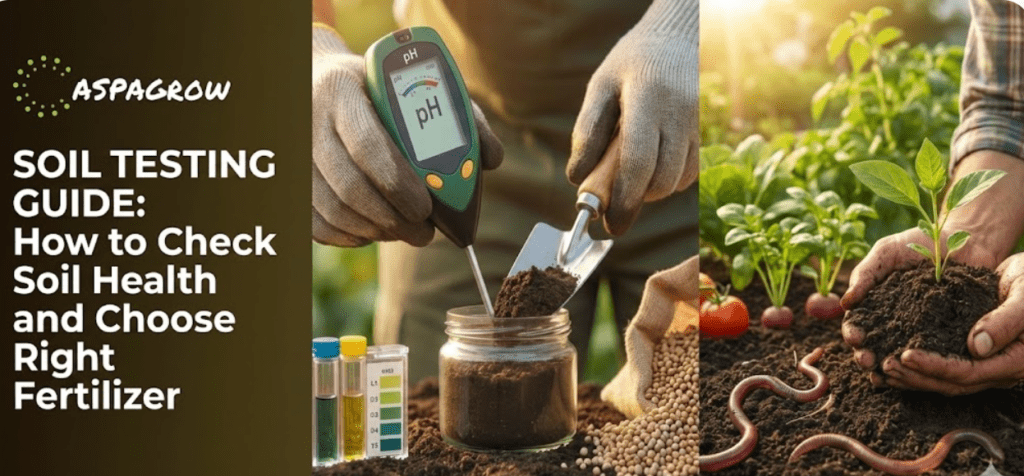
When Should You Test Your Soil?
Soil testing should ideally be done:
- before sowing season
- after harvest (for next crop planning)
- once every 2–3 years minimum
- whenever crop shows poor growth or yellow leaves
For intensive farming (2–3 crops per year), testing every year gives the best results.
Soil Testing Guide: Step-by-Step Process
Now let’s understand how farmers can test soil properly.
Step 1: Select the Right Time
Best time for soil sample collection is:
- before fertilizer application
- before irrigation
- when soil is not too wet or muddy
Avoid sampling immediately after applying urea or manure.
Step 2: Collect Soil Samples Correctly
Correct sampling is the most important part of soil testing.
How to collect soil sample:
- Divide the field into sections (if soil type varies).
- From each section, collect soil from 8–10 points.
- Dig soil 6–8 inches deep (for most crops).
- Mix all collected soil in a clean bucket.
- Remove stones, roots, and grass.
- Take 500 gm of mixed soil for testing.
✅ For orchards (mango, banana etc.), sample depth may be 1–2 feet depending on root zone.
Step 3: Dry and Pack Soil Sample
- Dry the soil sample in shade (not sunlight).
- Put in clean cloth or plastic bag.
- Write details: farmer name, village, crop, land type.
Step 4: Submit the Sample for Soil Test
Farmers can submit soil samples at:
- government soil testing labs
- agriculture department offices
- KVK (Krishi Vigyan Kendra)
- private soil labs
- soil health card centers
Most states provide Soil Health Card services at low cost or free.
Step 5: Understand Your Soil Test Report
A soil test report includes:
1. Soil pH
- pH < 6.5 = acidic soil
- pH 6.5–7.5 = normal soil
- pH > 7.5 = alkaline soil
pH affects nutrient absorption.
2. Organic Carbon
Indicates soil fertility.
Low organic carbon means poor soil health and low water retention.
3. NPK levels
Shows nitrogen, phosphorus and potassium status.
4. Micronutrients
Zinc and Boron deficiency is common in Indian soils.
How to Choose the Right Fertilizer Based on Soil Test
This is the most important part.
1. Nitrogen Management (N)
Nitrogen is required for leaf growth. If soil nitrogen is low:
- split urea application in 2–3 parts
- avoid applying all urea at once
- combine organic manure + urea for better results
Too much nitrogen causes:
- excessive leaf growth
- weak plant
- pest attack
- poor flowering
2. Phosphorus Management (P)
Phosphorus supports root growth and early crop stage.
If phosphorus is high in soil:
✅ reduce DAP usage
✅ avoid repeated DAP every crop
✅ use balanced NPK fertilizer
Many Indian farmers apply excess DAP which reduces micronutrient absorption.
3. Potassium Management (K)
Potassium improves:
- fruit quality
- disease resistance
- water balance
- grain size
If potassium is low:
- apply MOP or SOP based on crop requirement
- use wood ash or compost (small quantity)
4. Micronutrients (Zn, Fe, B, Mn)
Micronutrients are needed in small quantity but give big impact.
If Zinc deficiency:
- apply Zinc sulphate (ZnSO4)
- use foliar spray if needed
If Boron deficiency:
- apply Borax in recommended dose
- helps in flowering and fruit set
Use Organic Manure for Soil Health
Even if you use chemical fertilizers, organic matter is necessary.
Add:
- compost
- FYM (farmyard manure)
- vermicompost
- green manure crops
This improves soil structure and reduces fertilizer requirement.
At AspaGrow, we strongly recommend balanced farming—mixing modern fertilizers and natural soil improvement methods.
Soil Testing and Sustainable Agriculture
Soil testing supports:
- sustainable farming
- climate-smart agriculture
- higher yield with lower resources
It reduces pollution caused by excess fertilizer runoff and protects groundwater.
FAQs | Soil Testing Guide
Q1. What is the purpose of a soil testing guide for farmers?
A soil testing guide helps farmers check soil health and understand which nutrients are low or excess in their land. It prevents guesswork and supports correct fertilizer planning. With a soil test report, farmers can apply NPK and micronutrients in the right quantity, which improves crop yield, reduces fertilizer cost, and increases long-term soil fertility. Soil testing is especially useful for small farmers who want maximum profit with minimum waste.
Q2. How often should farmers do soil nutrient testing?
Farmers should do soil nutrient testing at least once every 2–3 years. However, if the farmer grows multiple crops in one year or follows intensive farming, testing soil annually is more beneficial. Soil testing is also recommended when crops show signs of nutrient deficiency like yellow leaves, slow growth, poor flowering, or reduced yield. Regular soil testing helps maintain balanced nutrients and ensures fertilizer is applied based on real needs.
Q3. How to check soil health at home before lab testing?
Farmers can do a basic soil health check at home by observing soil texture, color, and moisture-holding capacity. Dark soil usually indicates better organic matter, while hard and cracked soil suggests poor structure. Farmers can also test soil pH using simple pH strips or kits. However, home methods are not fully accurate. A proper lab soil test report is necessary to know exact NPK and micronutrient levels and choose the right fertilizer for crops.
Q4. How does soil testing help in choosing the right fertilizer?
Soil testing shows exactly what nutrients the soil has and what is missing. For example, if phosphorus is already high, the farmer can reduce DAP and save money. If zinc is low, zinc sulphate can be applied for better crop growth. This is how soil testing helps farmers choose the right fertilizer instead of applying random fertilizer combinations. It improves yield, prevents nutrient imbalance, and ensures fertilizer works effectively.
Q5. Can soil testing increase crop yield and reduce farming cost?
Yes, soil testing can increase crop yield and reduce farming cost. When fertilizers are applied based on soil test report, crops get balanced nutrition, resulting in healthy growth and better output. At the same time, farmers save money by avoiding unnecessary fertilizer use. Soil testing also helps improve long-term soil fertility which means stable yields for many years. Farmers who follow soil testing and balanced fertilization often see improved productivity in just 1–2 seasons.
Conclusion
A soil test is the smartest step a farmer can take before investing in fertilizers. This Soil Testing Guide shows that soil testing helps farmers understand soil health, correct nutrient imbalance, and choose the right fertilizer based on the soil report. It reduces unnecessary fertilizer cost and improves crop yield consistently.
At AspaGrow, we believe soil testing is not a complex process—it is a simple habit that improves farming results season after season.