Regenerative Agriculture: Agriculture is undergoing a major transformation. After decades of depending heavily on chemical fertilizers, pesticides, deep tilling, and monocropping, farmers around the world are realizing that these practices have weakened the very foundation of food production—the soil. Poor soil health, rising input costs, unpredictable weather, and decreasing yields have made traditional farming more challenging than ever.
This is where Regenerative Agriculture emerges as a powerful, science-backed alternative. It is not just another farming trend—it is a complete shift in mindset, focusing on healing the soil, protecting biodiversity, restoring ecosystems, and improving long-term productivity. From large commercial farms to small organic growers, regenerative agriculture is proving to be one of the most promising approaches for sustainable food production.
This 2000-word guide explores regenerative agriculture in detail—its principles, benefits, practices, challenges, and how farmers can begin adopting it today.
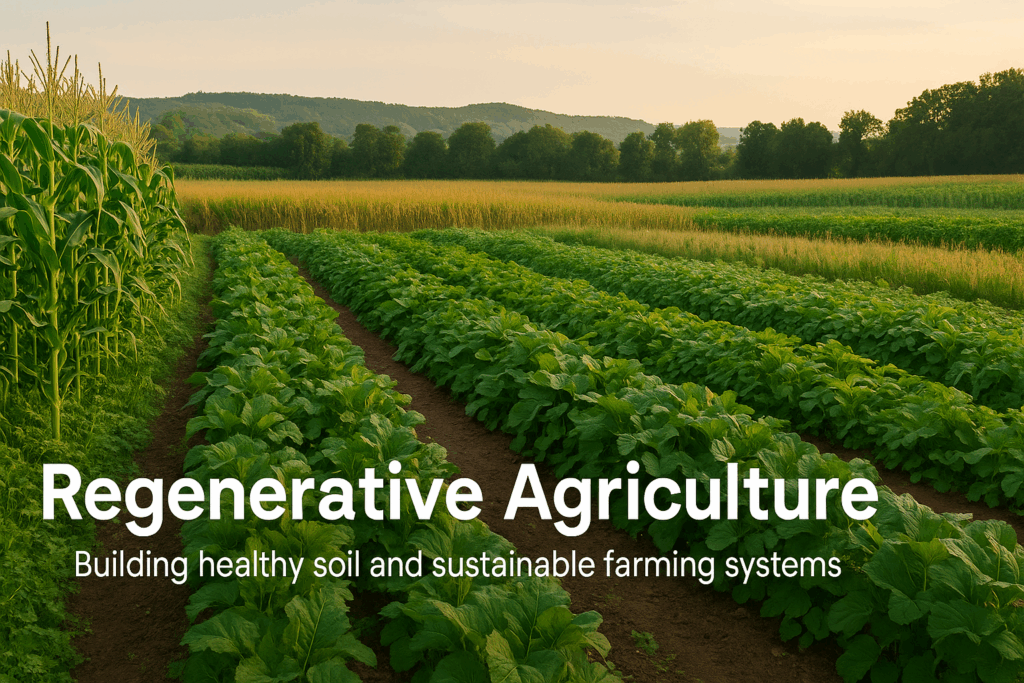
What Is Regenerative Agriculture?
Regenerative agriculture is a holistic farming system designed to rebuild and restore natural resources rather than deplete them. Instead of treating soil as a lifeless surface that simply holds plants upright, regenerative agriculture recognizes soil as a living ecosystem full of microorganisms, earthworms, minerals, fungi, carbon, and nutrients.
The goal is to:
- Restore soil organic matter
- Improve soil structure
- Increase biodiversity
- Strengthen natural water cycles
- Reduce dependency on chemicals
- Increase long-term farm resilience
Where conventional farming extracts nutrients from the soil, regenerative farming puts them back—continuously strengthening the land for the next generation.
Why Regenerative Agriculture Matters Today
1. Soil Degradation is a Global Crisis
More than one-third of the world’s soil is already degraded due to chemical farming, erosion, and excessive tillage. If this continues, it threatens food security, farm income, and future agricultural productivity
2. Water Scarcity Is Rising
Healthy soil holds more water. Degraded soil repels water. Regenerative practices help farms survive droughts and reduce irrigation needs.
3. Rising Cost of Fertilizers and Pesticides
Chemical inputs are becoming more expensive every year. Regenerative farming reduces this dependency dramatically.
4. Climate Change Demands Better Farming Practices
Regenerative agriculture pulls carbon from the atmosphere and stores it in the soil, helping fight climate change.
5. Consumers Want Healthier, Chemical-Free Food
Demand for organic and regeneratively grown produce is increasing worldwide.
Regenerative agriculture offers solutions to all these modern challenges in a sustainable and profitable way.
Core Principles of Regenerative Agriculture
There are five major principles that make regenerative agriculture unique and effective:
1. Minimize Soil Disturbance
Tilling breaks soil structure, kills microbes, and increases erosion. Regenerative agriculture promotes:
- No-till farming
- Low-till methods
- Direct seeding techniques
This protects the soil’s natural structure and prevents carbon loss.
2. Maximize Soil Cover
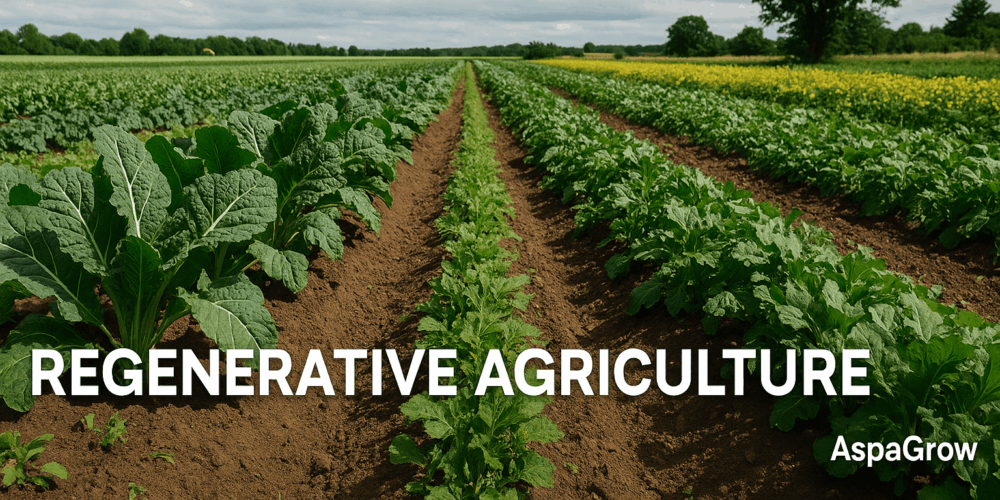
Bare soil is unhealthy soil. Cover crops, organic mulch, crop residues, and natural plant cover:
- Prevent erosion
- Keep moisture locked in
- Provide food to soil microbes
- Reduce weed growth
Healthy soil must always be protected.
3. Promote Crop Diversity
Monocropping creates pest cycles and nutrient imbalance. Regenerative agriculture encourages:
- Crop rotation
- Intercropping
- Multi-species farming
Diversity strengthens ecosystem health.
4. Keep Living Roots in the Ground
Living roots feed soil organisms year-round. This boosts microbial activity and increases organic matter.
5. Integrate Livestock Responsibly
Animals are not enemies of farming—they are partners. Managed grazing:
- Fertilizes soil naturally
- Stimulates plant growth
- Improves pasture health
This closes nutrient cycles that chemicals often disrupt.
Benefits of Regenerative Agriculture
Below are the major benefits that regenerative agriculture offers:
1. Healthier Soil Structure
Regenerative practices improve soil texture, fertility, aeration, and microbial activity. Living soil produces stronger, more resilient crops.
2. Better Water Retention and Less Irrigation
Healthy soil acts like a sponge, absorbing rainwater and reducing irrigation needs. This helps farmers during drought conditions.
3. Reduced Dependency on Chemical Inputs
Over time, regenerative agriculture:
- Cuts fertilizer usage
- Reduces pesticide spraying
- Eliminates herbicide dependency
This saves money and protects the environment.
4. Higher Long-Term Yields
While the first year may show small changes, regenerative practices dramatically increase yields over 3–5 years due to richer soil and stronger plants.
5. Protection Against Environmental Stress
Regenerative farms are more resilient to:
- droughts
- heavy rainfall
- heat waves
- soil diseases
Healthy soil = stronger plants.
6. Reduced Soil Erosion
Crop cover and zero tilling prevent erosion and protect topsoil—the most crucial layer for farming.
7. Improved Biodiversity
Regenerative farms encourage:
- birds
- insects
- earthworms
- beneficial microbes
This creates a healthier, more adaptive ecosystem
8. Increased Carbon Sequestration
Regenerative agriculture is one of the most effective ways to capture carbon from the atmosphere and store it in the soil. This helps reduce global warming.
9. Higher Profit Margins for Farmers
Farmers benefit through:
- lower input costs
- premium pricing for regenerative produce
- long-term soil improvement
- sustainable crop cycles
It improves both income and land quality.
Regenerative Agriculture Practices You Can Start Today
Here are practical steps for farmers to adopt regenerative methods:
- Use cover crops like legumes, oats, and clover
- Reduce or stop deep tilling
- Apply compost, cow dung, and organic matter
- Rotate crops each season
- Use mulching for moisture retention
- Introduce earthworms and microbes
- Avoid burning crop residues
- Integrate livestock grazing
- Plant trees (agroforestry)
- Reduce chemical inputs yearly
Even small changes create big long-term improvements.
Common Challenges in Regenerative Agriculture
🔸 Slow Initial Results
Soil recovery takes time. Benefits are long-term, not immediate.
🔸 Need for Knowledge & Training
Farmers need training in soil biology and regenerative systems.
🔸 Market Awareness
Though growing fast, regenerative produce markets are still developing.
🔸 Transition Phase
Switching from chemical systems may temporarily reduce yields.
However, once the soil stabilizes, benefits exceed expectations.
How Does Regenerative Agriculture Influence the Future of Farming?
Regenerative agriculture is expected to become the global standard in coming years due to:
- rising climate challenges
- declining soil fertility
- increasing consumer demand for clean food
- global government policies promoting sustainable agriculture
The future of farming is green, regenerative, and soil-first
5 FAQs | Regenerative Agriculture
1. Is regenerative agriculture suitable for small farmers?
Yes, regenerative agriculture works well for both small and large farms. Even small farmers can begin with simple steps like mulching, crop rotation, and reducing tillage. AspaGrow supports farmers of all scales by providing easy-to-follow regenerative farming guidance and practical solutions for improving soil health.
2. How long does it take to see results?
Farmers may notice improvements in soil moisture and plant strength within a few months. However, deeper soil recovery and long-term gains often take 2–3 years. AspaGrow helps farmers stay consistent during this transition by offering tailored support and sustainable soil improvement strategies.
3. Does regenerative farming reduce costs?
Yes, regenerative agriculture significantly reduces the need for chemical fertilizers, pesticides, and irrigation over time. This lowers overall farming expenses. AspaGrow works closely with farmers to help them adopt low-cost regenerative methods that make farming more profitable and sustainable.
4. Can regenerative farming work without livestock?
Absolutely. While livestock can enhance soil fertility, farmers can still practice regenerative agriculture through composting, cover crops, crop rotation, and mulching. AspaGrow provides plant-based soil nutrition and regenerative farming tools that work even in farms without animals.
5. Does regenerative agriculture increase crop yields?
Yes. Although yields might remain stable or drop slightly during the early transition, they increase consistently as soil health improves. AspaGrow helps farmers monitor soil performance and adopt practices that boost long-term yield, resilience, and food quality.
Conclusion
Regenerative agriculture is more than a farming method—it is a commitment to restoring the land, protecting biodiversity, and building a resilient future for farming. By improving soil health, reducing chemical dependency, and increasing long-term productivity, regenerative practices offer farmers a sustainable path forward.
Whether you’re a small grower or a commercial farmer, embracing regenerative agriculture can transform your land and your livelihood. With expert support from AspaGrow, farmers gain access to practical tools, soil-focused solutions, and step-by-step guidance designed to make regenerative farming easier and more profitable.
Healthy soil grows healthy crops—and with AspaGrow by your side, regenerative agriculture becomes a powerful journey toward a greener, more sustainable future.