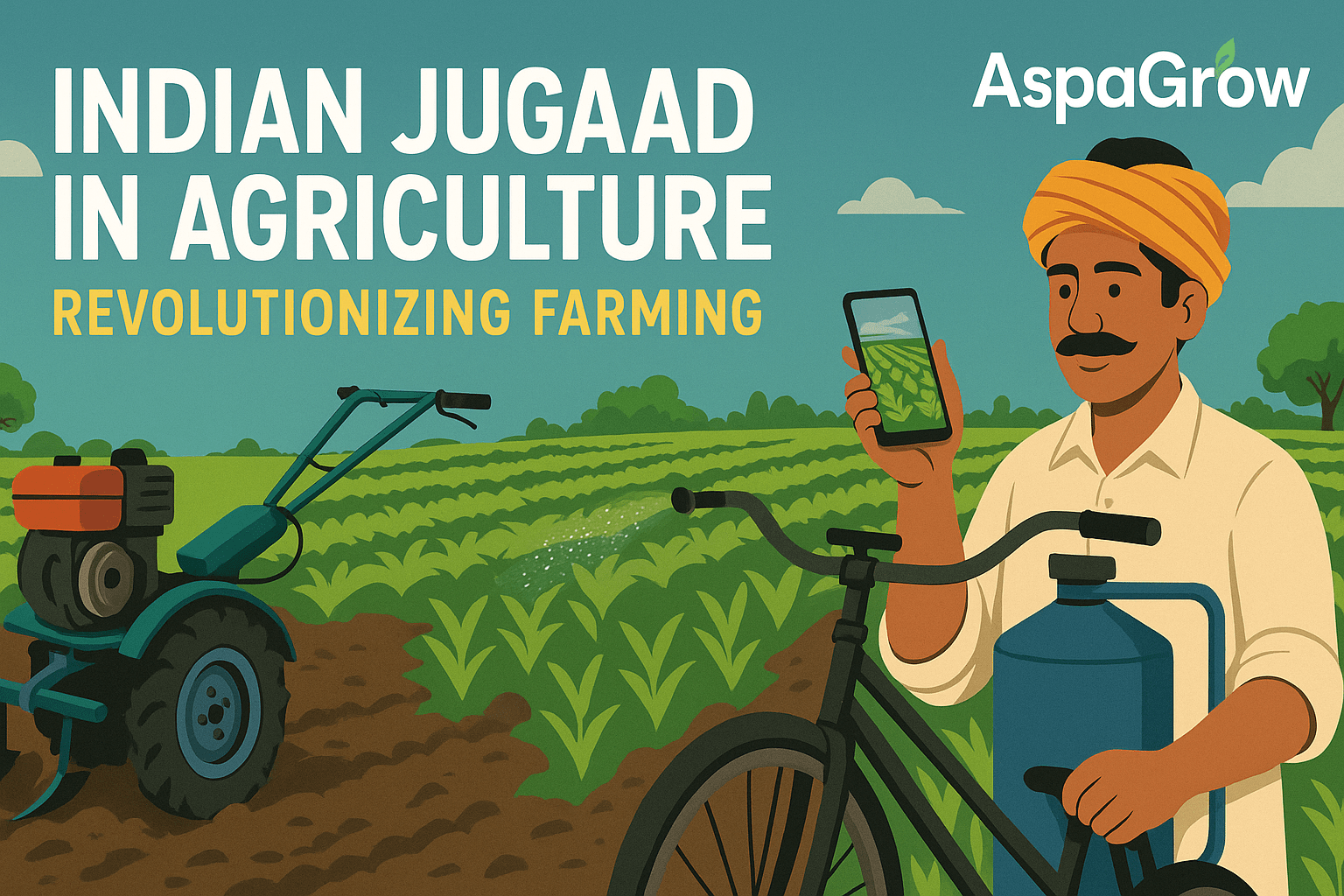
India has always been a land of innovation. Long before modern machinery and high-tech agriculture tools became popular, farmers in India relied on their intelligence, creativity, and problem-solving ability to make farming efficient and cost-effective. This unique approach is widely known as “Jugaad” — a simple, clever, and affordable technique to solve complex problems using local resources.
In agriculture, Jugaad has played a major role in helping farmers manage irrigation, cultivation, harvesting, and daily farm tasks without expensive machinery. Whether it’s converting a bicycle into a sprayer, modifying an old scooter to plough fields, or using simple household items as farming tools, Indian farmers have never stopped innovating.
Today, as farming becomes more challenging due to rising input costs, weather changes, and technological gaps, Indian Jugaad is transforming agriculture more than ever. With support from eco-driven organizations like AspaGrow, these innovations are being recognized, improved, and encouraged to make farming smarter, cheaper, and more sustainable.
This blog explores how Indian Jugaad is creating a revolution in agriculture, empowering farmers, and shaping the future of sustainable farming in India.
Understanding Jugaad: The Heart of Indian Agriculture. Low-Cost Irrigation Hacks
“Jugaad” is not just a word — it’s an approach, a mindset, and a practical problem-solving system. It means:
- Doing more with less
- Using available resources smartly
- Finding faster, cheaper solutions
- Innovating without waiting for external support
In the rural farming ecosystem where resources may be limited, Jugaad becomes a powerful tool that helps farmers stay productive and independent.
Why Indian Farmers Rely on Jugaad
✔ Because farming inputs are expensive
New machines, sprayers, harvesters, and tools cost thousands of rupees—often beyond reach for small farmers.
✔ Because resources are limited
Electricity, water, spare parts, and advanced technology may not be available in villages.
✔ Because challenges are unpredictable
Weather, pests, irrigation problems, and soil challenges demand quick solutions.
✔ Because traditional knowledge is strong
Farmers understand land better than anyone. This makes their innovations practical and effective.
Jugaad fills these gaps beautifully, helping farmers create low-cost farming solutions that work in real conditions.
Top Jugaad Innovations Revolutionizing Indian Agriculture
Below are the most impactful and widely used Jugaad innovations seen across Indian villages. These real-life hacks are powerful examples of India’s farming creativity
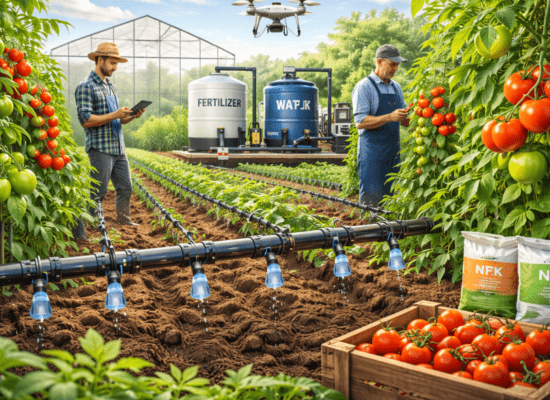
1. Low-Cost Drip Irrigation Using Plastic Bottles
Water scarcity is one of the biggest issues farmers face. Instead of expensive drip systems, farmers create low-cost drip irrigation using:
- Plastic bottles
- Small needles or pins
- Thin pipes
The bottles are hung above plants, releasing water drop-by-drop.
Benefits:
- Saves up to 70% water
- Prevents soil erosion
- Ideal for vegetable and fruit crops
- Zero electricity or motor needed
This simple hack has spread across India and inspires modern irrigation startups.
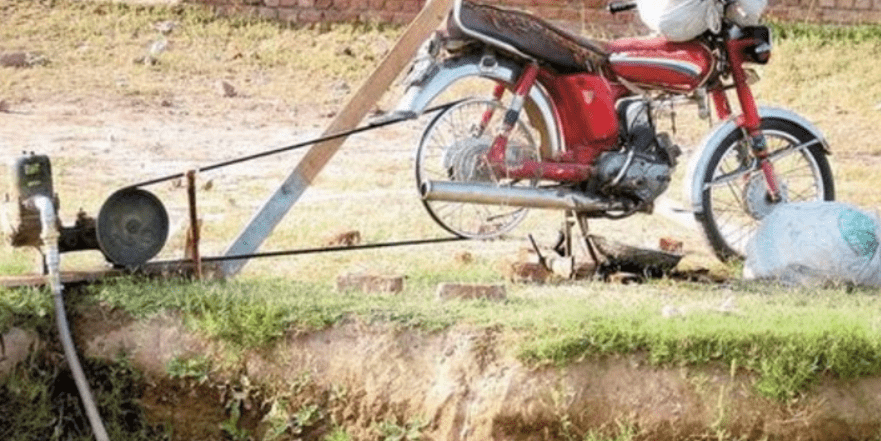
2. Converting Old Motorbike Engines into Water Pumps
An iconic Indian Jugaad:
Farmers modify old bike engines to work as water pump motors.
Why it works:
- High power output
- Easy to repair
- Runs on petrol/diesel
- Reliable in remote areas
This innovation is widely used for irrigation in regions with irregular electricity supply.
3. Solar-Powered Jugaad for Rural Farming
With rising energy costs, farmers cleverly reuse old solar panels to create:
- Solar pest traps
- Solar lamps for night farming
- Solar mini water pumps
- Solar drying trays for grains
- Solar fencing to protect fields
These eco-friendly hacks lower electricity bills and support sustainable farming in India, a focus area promoted strongly by AspaGrow.
4. Modified Bicycles for Farming Work
This is one of the most creative Indian farming hacks ever seen.
Farmers convert bicycles into:
- Fertilizer spreaders
- Seed sowers
- Mini weeders
- Spray pumps
It reduces human effort dramatically. What’s truly amazing is that these ideas require no heavy investment—just imagination.
5. Reusing Household Items for Agriculture
Indian farmers treat household waste as useful tools. Examples include:
- Old sarees → shade nets for nurseries
- Broken buckets → seedling trays
- Cloth filters → cleaning organic fertilizers
- Plastic bottles → nursery covers
- Mud pots → natural grain storage
Not a single item goes unused. This reduces waste and aligns with AspaGrow’s values of a circular, eco-friendly farming system.
6. Smart Weeding and Harvesting Tools Made From Scrap
Farmers design innovative tools from scrap metal, cycle spokes, or old machinery parts:
- Hand weeders
- Multi-crop cutters
- Soil loosening tools
- Tractor attachments
- Mini seed drills
These tools help farmers work faster with less physical strain.
7. Cow-Based Bio Fertilizer Jugaad
With rising fertilizer costs, Indian farmers have turned back to traditional formulas using cow dung and cow urine:
- Jeevamrut
- Panchagavya
- Agniastra
- Brahmastra
- Compost tea
- Fermented plant extracts
These natural fertilizers improve soil health, reduce chemical dependency, and increase crop immunity. AspaGrow actively encourages such natural solutions to support healthy, chemical-free agriculture.
Smartphone + Internet = Digital Farming Jugaad
Technology has made Indian farmers smarter than ever.
Today they use:
- WhatsApp groups for pest identification
- YouTube videos for farming training
- Google Lens for disease detection
- Online marketplaces for buying inputs
- UPI payments for fast transactions
This digital jugaad saves time, reduces misinformation, and empowers farmers with knowledge.
How Indian Jugaad Is Supporting Modern Agriculture
Many agritech startups in India study these grassroots ideas to create successful commercial products.
Jugaad-inspired products include:
- Low-cost moisture sensors
- Affordable drip systems
- Portable cold storage units
- Mobile soil testing kits
- Solar-powered sprayers
This proves that India’s innovation doesn’t start in labs — it starts in farms.
How AspaGrow Supports Jugaad-Based Farming
AspaGrow plays an important role in:
- Promoting farmer-led innovation
- Encouraging low-cost sustainable farming solutions
- Providing training on regenerative and organic practices
- Supporting soil health improvement
- Guiding farmers on modern agriculture methods
- Simplifying digital learning for rural farmers
AspaGrow believes that combining Jugaad with modern techniques can transform Indian agriculture in a powerful way.
FAQs
Why is Indian Jugaad important in modern agriculture?
Indian Jugaad helps farmers solve problems quickly without waiting for expensive machinery or technology. It keeps farming affordable and practical. AspaGrow encourages farmers to use safe, effective Jugaad ideas that improve productivity without increasing costs.
Can Jugaad innovations work long-term?
Yes, many do. Some Jugaad tools last for years because they are built from strong materials like metal, old engines, or recycled parts. AspaGrow also helps farmers refine these ideas to make them more durable and efficient.
How does Jugaad help small farmers?
Small farmers benefit the most because it reduces expenses. They can replace expensive machines with simple DIY tools. AspaGrow guides such farmers with practical solutions that make daily work easier and more sustainable.
Is it safe to use Jugaad tools?
Most Jugaad solutions are safe if used properly. Farmers should avoid using unstable or untested machinery. AspaGrow advises farmers on safe, environment-friendly methods that protect both the soil and the farmer.
How is technology improving Jugaad in agriculture?
Technology allows farmers to learn new ideas quickly. Apps, online videos, and farming groups help share Jugaad methods across India. AspaGrow uses digital training to help farmers adopt smarter farming techniques.s.
Conclusion
Indian Jugaad is the heart of agricultural innovation. From makeshift tools to smart water systems, Indian farmers have always shown that creativity can solve problems faster than technology alone. Today, when farming faces challenges like climate change, high input costs, and rising labor shortages, Jugaad is not just a solution—it is a revolution.
With organizations like AspaGrow supporting sustainability, soil health, and farmer education, these innovations are gaining national recognition. Jugaad proves that even simple ideas can modernize farming, reduce costs, and improve productivity. It shows the world that when farmers have creativity, courage, and support, they can change the future of agriculture..