Banana farming plays a vital role in the livelihoods of millions of farmers worldwide. However, one of the biggest challenges growers face is banana diseases. These diseases can spread quickly, reduce yield, lower fruit quality, and sometimes destroy entire plantations if not identified early.
At Aspagrow, we work closely with farmers to promote healthy crops and sustainable farming practices. Understanding banana diseases, their symptoms, and the right solutions can save time, money, and crops. This guide is written in simple language to help farmers easily identify common banana diseases and take timely action.
What Are Banana Diseases?
Banana diseases are infections caused by fungi, bacteria, viruses, or pests that affect banana plants at different growth stages. These diseases can attack:
- Leaves
- Stems
- Roots
- Fruits
Early identification is the key to preventing severe damage.
Common Causes of Banana Diseases
Banana diseases often occur due to:
- Poor drainage and waterlogging
- Infected planting material
- High humidity and warm climate
- Lack of crop rotation
- Improper farm hygiene
At Aspagrow, we always advise farmers to focus on prevention before treatment.
Major Banana Diseases, Symptoms, and Solutions
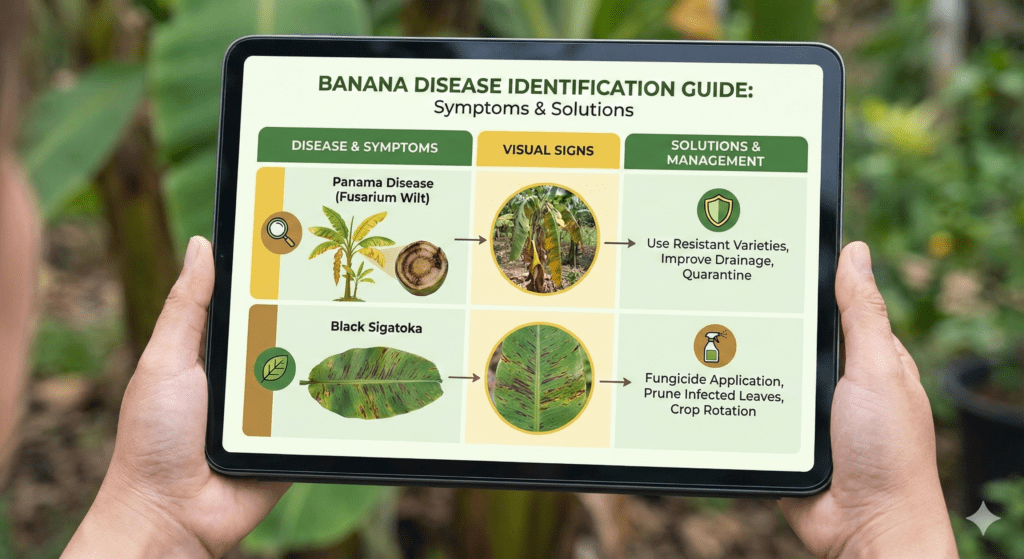
1. Panama Disease (Fusarium Wilt)
Cause: Soil-borne fungus
Symptoms:
- Yellowing of older leaves
- Wilting of leaves
- Splitting of pseudostem
- Dark brown discoloration inside the stem
Solutions:
- Use disease-free planting material
- Avoid planting bananas in infected soil
- Practice crop rotation
- Improve soil drainage
Panama disease is one of the most destructive banana diseases globally.
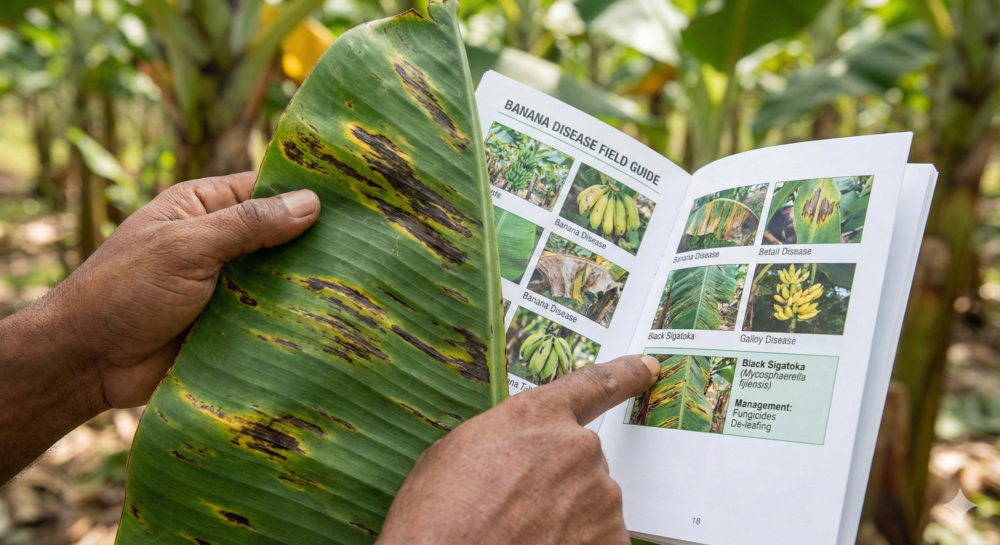
2. Sigatoka Leaf Spot (Black & Yellow Sigatoka)
Cause: Fungal infection
Symptoms:
- Yellow or black streaks on leaves
- Reduced leaf area
- Poor fruit development
Solutions:
- Remove infected leaves
- Improve air circulation
- Apply recommended fungicides
- Use resistant banana varieties
Sigatoka disease directly affects banana yield and fruit size.
3. Bacterial Wilt (Moko Disease)
Cause: Bacteria
Symptoms:
- Sudden wilting
- Yellowing of leaves
- Brown ooze from cut stem
- Premature fruit ripening
Solutions:
- Destroy infected plants
- Disinfect farming tools
- Control insect vectors
- Maintain farm hygiene
Bacterial wilt spreads fast and needs immediate action.
4. Banana Bunchy Top Disease (BBTV)
Cause: Virus transmitted by aphids
Symptoms:
- Narrow, upright leaves
- “Bunchy” appearance at the top
- Stunted plant growth
Solutions:
- Remove infected plants immediately
- Control aphids
- Use virus-free planting material
This viral disease is one of the most easily recognizable banana diseases.
5. Anthracnose
Cause: Fungus
Symptoms:
- Black sunken spots on fruits
- Fruit rotting during storage
- Reduced shelf life
Solutions:
- Harvest at proper maturity
- Avoid fruit injury
- Use fungicidal treatments
- Store fruits in clean conditions
Anthracnose mainly affects post-harvest banana quality.
6. Root Rot and Corm Rot
Cause: Fungal pathogens
Symptoms:
- Weak plant growth
- Root decay
- Plant lodging
Solutions:
- Improve soil drainage
- Avoid waterlogging
- Apply biological treatments
- Use healthy suckers
How to Identify Banana Diseases Early
Early identification of banana diseases includes:
- Regular field inspection
- Observing leaf color changes
- Checking stem and root condition
- Monitoring fruit appearance
Aspagrow encourages farmers to keep records of plant health to spot disease patterns early.
Preventive Measures for Banana Diseases
Prevention is always better than cure. Key preventive steps include:
- Use certified planting material
- Maintain proper spacing
- Ensure good drainage
- Practice crop rotation
- Keep tools clean
At Aspagrow, we promote preventive farming as the most cost-effective solution.
Role of Good Agricultural Practices (GAP)
Following Good Agricultural Practices reduces banana disease risk:
- Balanced fertilization
- Proper irrigation
- Integrated pest management
- Timely pruning
Healthy plants are naturally more resistant to diseases.
Organic and Biological Control Options
Many banana diseases can be managed using eco-friendly methods:
- Trichoderma for soil health
- Neem-based products
- Compost and organic manure
These solutions are safer for soil and environment.
Economic Impact of Banana Diseases
Banana diseases can cause:
- Yield loss
- Poor fruit quality
- Increased production cost
- Market rejection
Proper disease management directly improves farmer income.
How Aspagrow Helps Farmers Manage Banana Diseases
At Aspagrow, our mission is to support farmers through:
- Knowledge sharing
- Promoting disease-resistant practices
- Encouraging sustainable farming
- Helping farmers reduce crop loss
We believe informed farmers grow healthier crops.
Future of Banana Disease Management
Modern farming is moving toward:
- Disease-resistant varieties
- Early detection systems
- Biological control methods
- Sustainable agriculture
With the right knowledge, banana diseases can be controlled effectively.
FAQs
Q1. What are the most common banana diseases?
Common banana diseases include Panama disease, Sigatoka leaf spot, bacterial wilt, bunchy top disease, and anthracnose.
Q2. How can farmers identify banana diseases early?
Regular field inspection, observing leaf discoloration, and checking stems and roots help in early detection of banana diseases.
Q3. Can banana diseases be cured completely?
Some banana diseases can be managed, while others require removing infected plants to prevent spread.
Q4. How can banana diseases be prevented naturally?
Using healthy planting material, improving soil health, and practicing crop rotation helps prevent banana diseases.
Q5. Why does Aspagrow focus on banana disease awareness?
Aspagrow focuses on awareness to help farmers reduce crop loss and improve sustainable banana production.der the impact on beneficial insects. With the right detective skills and effective pesticides in your toolkit, you can protect your beloved bananas from these pesky pests.
Conclusion
Banana diseases are a serious threat, but they are manageable with early identification and proper solutions. Understanding symptoms, causes, and preventive measures helps farmers protect their crops and livelihoods.
At Aspagrow, we strongly believe that awareness, timely action, and sustainable practices are the best tools to fight banana diseases. Healthy plants mean better yields, better quality, and better income for farmers.