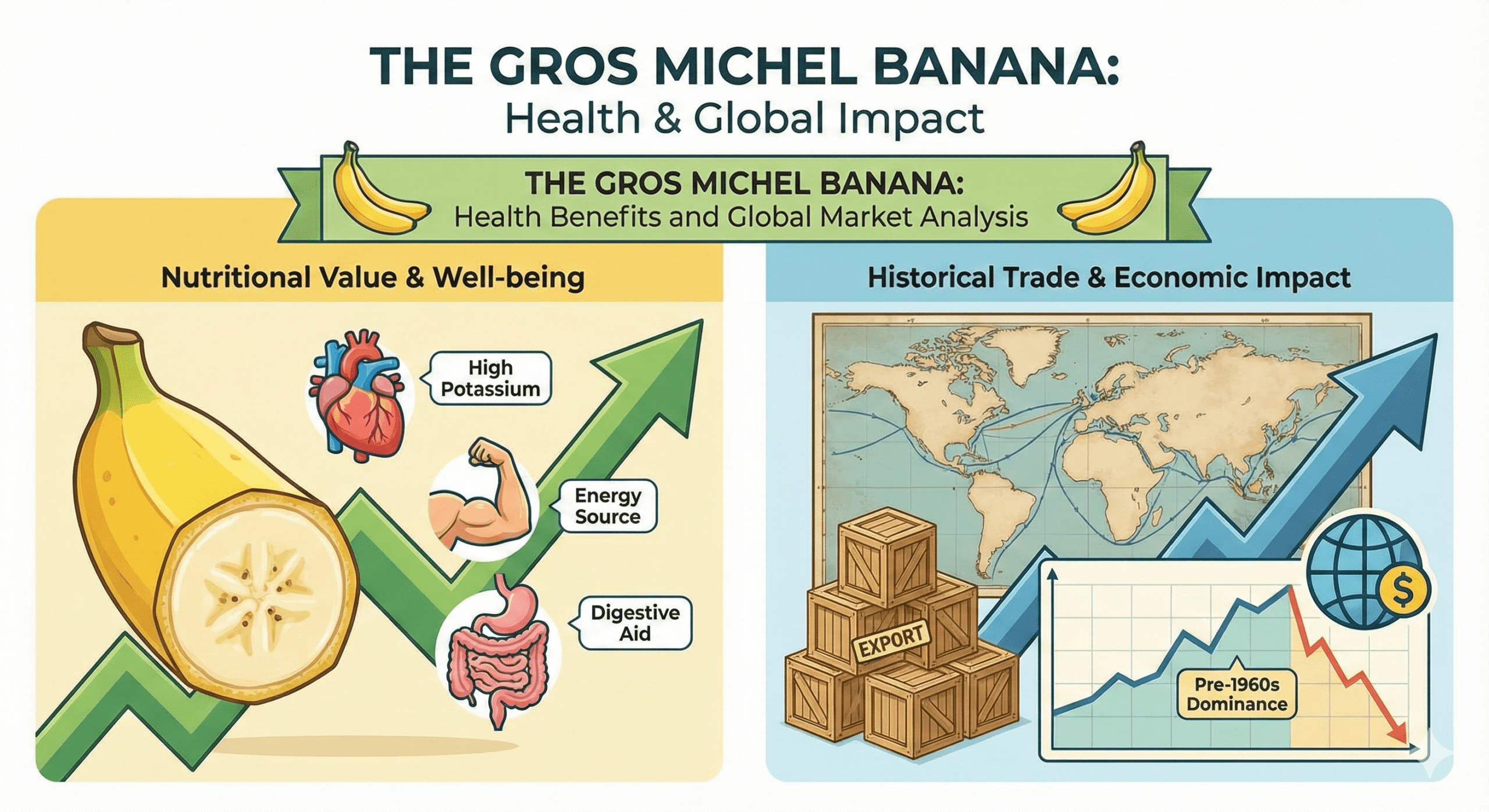
The Gros Michel Banana is more than just a fruit; it is a legend in the global banana industry. Once known as the “King of Bananas,” Gros Michel Banana dominated world markets before disappearing almost overnight due to disease. Even today, decades after its decline, this banana variety continues to attract attention from farmers, researchers, exporters, and health-focused consumers.
At Aspagrow, we study traditional and exotic crop varieties that hold long-term agricultural and commercial value. Gros Michel Banana is one such variety—rich in taste, nutrition, and history. While modern bananas like Cavendish rule supermarkets today, many still believe Gros Michel Banana offers superior flavor and better natural resistance when grown under controlled conditions.
This blog explores the health benefits of Gros Michel Banana, its rise and fall in global trade, and its current and future market potential.
What Is Gros Michel Banana?
The Gros Michel Banana, often called “Big Mike,” is a large, thick-skinned banana variety that was once the backbone of the global banana trade. It was widely grown in Central America, the Caribbean, parts of Africa, and Southeast Asia.
What made Gros Michel Banana special was:
- Rich, creamy taste
- Thicker peel (better for transport)
- Strong aroma
- Higher perceived sweetness
Before the 1950s, almost every banana sold internationally was a Gros Michel Banana.
The Unique Taste of Gros Michel Banana
One of the biggest reasons Gros Michel Banana is still talked about today is its flavor. Compared to modern bananas, it is:
- Sweeter
- Creamier
- More aromatic
Many food experts and chefs say Gros Michel Banana tastes closer to “classic banana flavor” used in banana candies and desserts. This is why artificial banana flavoring is often based on Gros Michel Banana, not Cavendish.
At Aspagrow, we often highlight how taste plays a major role in market revival. As consumers move toward premium and heritage foods, Gros Michel Banana is slowly regaining interest.
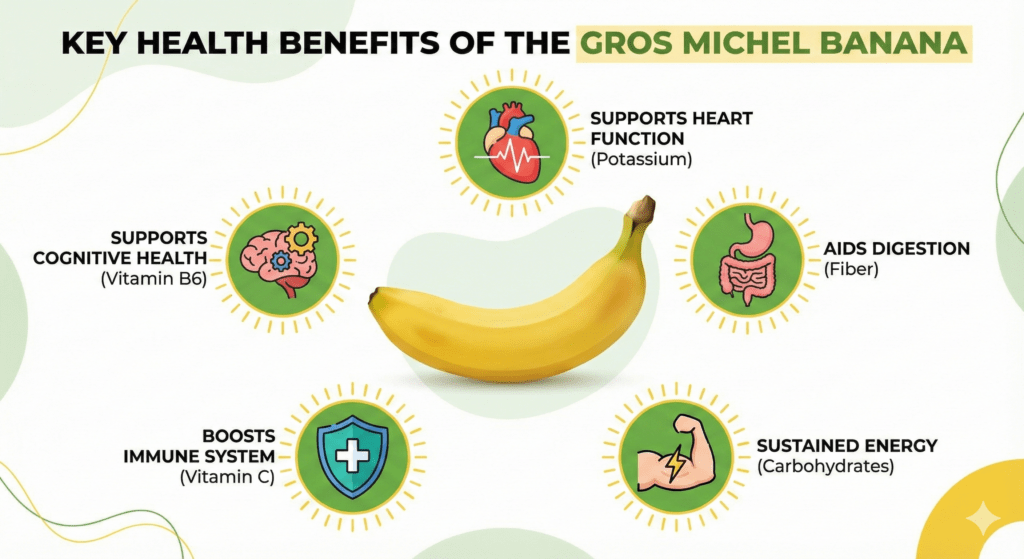
Health Benefits of Gros Michel Banana
1. Rich Source of Natural Energy
Gros Michel Banana contains natural sugars like glucose, fructose, and sucrose, making it an excellent energy booster. It is ideal for athletes, children, and working professionals.
2. Supports Heart Health
High potassium levels help regulate blood pressure and support proper heart function. Regular consumption of Gros Michel Banana can reduce the risk of hypertension.
3. Improves Digestion
The dietary fiber in Gros Michel Banana helps improve digestion, prevent constipation, and support gut health.
4. Boosts Immunity
This banana variety contains vitamin C and antioxidants that help strengthen the immune system and protect against infections.
5. Supports Mental Well-Being
Vitamin B6 present in Gros Michel Banana supports brain health and helps regulate mood by aiding serotonin production.
At Aspagrow, we believe that rediscovering nutrient-dense crops like Gros Michel Banana is key to sustainable nutrition.
Why Did Gros Michel Banana Disappear?
Despite its popularity, Gros Michel Banana faced a major downfall due to Panama Disease (Fusarium wilt).
Key Reasons for Decline:
- Highly susceptible to Fusarium fungus
- Monoculture farming increased risk
- No effective treatment at that time
- Entire plantations wiped out
By the 1960s, most commercial farms switched to the Cavendish Banana, which showed resistance to the disease.
This marked one of the biggest shifts in agricultural history.
Gros Michel Banana vs Cavendish Banana
| Feature | Gros Michel Banana | Cavendish Banana |
|---|---|---|
| Taste | Rich & creamy | Mild |
| Peel | Thick | Thin |
| Transport | Very good | Moderate |
| Disease Resistance | Low (earlier) | Higher |
| Market Presence | Limited | Global |
Today, Cavendish dominates exports, but many consumers still prefer the taste of Gros Michel Banana.
Global Market Analysis of Gros Michel Banana
Current Market Status
While Gros Michel Banana is no longer mass-produced, it is still grown in:
- Thailand
- Philippines
- Indonesia
- Parts of Africa
- Small farms in Latin America
It is mostly sold in local markets, organic stores, and specialty fruit exports.
Growing Demand for Heritage Crops
Global food trends show rising demand for:
- Heirloom varieties
- Exotic fruits
- Chemical-free farming
- Premium taste experiences
This creates new opportunities for Gros Michel Banana.
At Aspagrow, we see strong potential for niche farming and controlled cultivation of Gros Michel Banana for premium markets.
Export Potential and Commercial Value
Gros Michel Banana commands higher prices due to:
- Rare availability
- Superior taste
- Nostalgic value
With proper disease-managed cultivation, it can become a profitable crop for:
- Organic exporters
- Boutique fruit brands
- Farm-to-market startups
Aspagrow encourages sustainable models rather than large-scale monoculture.
Cultivation Challenges and Solutions
Challenges:
- Disease sensitivity
- Requires careful soil management
- Needs expert monitoring
Solutions:
- Tissue culture plants
- Crop rotation
- Controlled irrigation
- Organic disease prevention
Modern farming techniques make it possible to grow Gros Michel Banana safely today.
Why Aspagrow Supports Gros Michel Banana Research
At Aspagrow, our focus is on:
- Sustainable agriculture
- High-value crops
- Farmer education
- Long-term profitability
We believe Gros Michel Banana deserves a second chance—this time with better science, better farming methods, and smarter markets.
Future of Gros Michel Banana
The future looks promising as:
- Consumers seek better taste
- Farmers diversify crops
- Organic markets grow
- Export niches expand
Gros Michel Banana may never replace Cavendish, but it doesn’t need to. Its strength lies in quality, not quantity.
FAQs
Q1. What is Gros Michel Banana famous for?
Gros Michel Banana is famous for its rich, creamy taste, thick peel, and strong aroma. Before the 1950s, Gros Michel Banana dominated the global banana market and was the most widely exported commercial banana variety in the world.
Q2. Is Gros Michel Banana healthier than regular bananas?
Yes, Gros Michel Banana is considered very nutritious. It is rich in potassium, dietary fiber, vitamin B6, and natural sugars, which support heart health, digestion, and energy levels. Many people prefer Gros Michel Banana for its higher sweetness and nutrient density.
Q3. Why did Gros Michel Banana stop being exported globally?
Gros Michel Banana exports declined mainly due to Panama Disease (Fusarium wilt), a soil-borne fungal infection that destroyed large banana plantations. The disease made large-scale banana farming and export unsustainable for Gros Michel Banana at that time.
Q4. Is Gros Michel Banana still grown today?
Yes, Gros Michel Banana is still grown today in limited regions such as Southeast Asia, Africa, and parts of Latin America. It is mostly available in organic farms, heirloom fruit cultivation, and niche agricultural markets rather than mass commercial exports.
Q5. Does Gros Michel Banana have commercial value now?
Yes, Gros Michel Banana has strong commercial value in premium fruit markets, organic produce segments, and specialty banana exports. Due to its superior taste and rarity, Gros Michel Banana often commands higher prices compared to common banana varieties.
Conclusion
The Gros Michel Banana is a powerful example of how taste, nutrition, and history shape global agriculture. Though once nearly lost, it is slowly returning through niche farming and premium demand. With impressive health benefits and unmatched flavor, Gros Michel Banana holds strong potential for the future.
At Aspagrow, we continue to support research, awareness, and sustainable cultivation of such iconic crop varieties—because the future of farming lies in balance, diversity, and value.