
Increasing crop yield has always been the main goal of every farmer. But today, farming is not the same as it was 20 years ago. Rising input costs, unpredictable weather, soil degradation, and labor shortages have made traditional farming methods less effective. To overcome these challenges, farmers are now adopting modern farming techniques that focus on efficiency, sustainability, and smart use of resources.
At AspaGrow, we strongly believe that combining traditional farming knowledge with modern technology is the key to higher crop yield and long-term success. In this blog, we will explain how to increase crop yield using modern farming techniques in a simple and practical way that every farmer can understand and apply.
What Is Crop Yield and Why It Matters
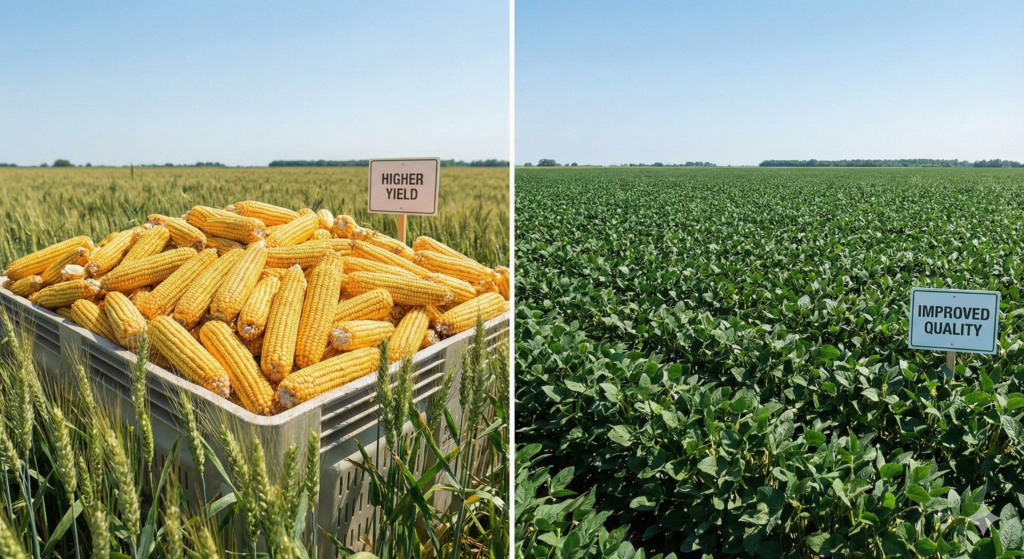
Crop yield refers to the amount of crop produced per unit of land. Higher yield means better income, lower cost per unit, and more food production. When crop yield improves, farmers earn more from the same land without increasing expenses unnecessarily.
Modern farming techniques help farmers grow more crops with less water, fewer chemicals, and lower labor costs, making farming profitable and sustainable.
1. Precision Farming: Farming with Accuracy
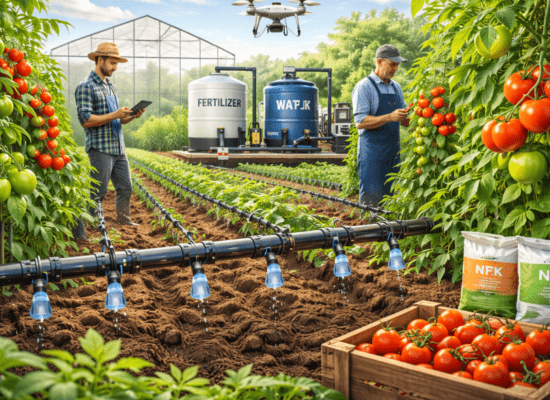
Precision farming is one of the most effective ways to increase crop yield. It uses technology like GPS, sensors, drones, and data analysis to manage crops more accurately.
Instead of applying fertilizers or water uniformly, precision farming ensures that each part of the field gets exactly what it needs. This avoids overuse and underuse of inputs.
Benefits of Precision Farming:
- Better nutrient management
- Reduced fertilizer wastage
- Improved crop health
- Higher and consistent yields
Farmers using precision farming often see 15–25% yield improvement within a few seasons.
2. Smart Irrigation Systems
Water is one of the most critical factors affecting crop yield. Traditional flood irrigation wastes water and damages soil health. Smart irrigation systems like drip irrigation and sprinklers deliver water directly to plant roots.
Modern systems also use sensors to measure soil moisture and automatically control irrigation.
Why Smart Irrigation Increases Yield:
- Prevents water stress in crops
- Improves root development
- Saves water and electricity
- Reduces weed growth
Using smart irrigation can increase crop yield by 20–30% while saving water.
3. Soil Health Management
Healthy soil is the foundation of high crop yield. Overuse of chemical fertilizers and poor farming practices reduce soil fertility over time.
Modern farming focuses on:
- Soil testing
- Balanced nutrient application
- Organic matter addition
Techniques to Improve Soil Health:
- Regular soil testing
- Using compost and organic manure
- Crop rotation
- Reduced tillage
Healthy soil improves nutrient absorption and leads to stronger, disease-resistant crops.
4. Use of High-Quality Seeds
Seed quality plays a major role in crop yield. Modern agriculture encourages the use of:
- Certified seeds
- Hybrid seeds
- Disease-resistant varieties
These seeds are developed to give higher yield, uniform growth, and resistance to pests and climate stress.
Farmers who switch from local seeds to certified seeds often notice a significant increase in productivity.
5. Balanced Fertilizer Management
Applying more fertilizer does not always mean higher yield. In fact, excess fertilizer can damage crops and soil.
Modern farming uses:
- Soil-based fertilizer planning
- Split fertilizer application
- Smart fertilizers
Best Practices:
- Apply fertilizers based on soil test results
- Use micronutrients where required
- Avoid overuse of nitrogen
Balanced fertilization ensures crops get the right nutrients at the right time, improving yield and quality.
6. Data-Driven Farming
Data-driven farming uses real-time data from:
- Soil sensors
- Weather reports
- Crop health monitoring
This helps farmers make informed decisions about irrigation, pest control, and harvesting time.
With data-driven farming, farmers can predict problems before they occur and take timely action, reducing crop loss and improving yield.
7. Integrated Pest Management (IPM)
Pests and diseases are major reasons for low crop yield. Instead of excessive pesticide use, modern farming promotes Integrated Pest Management (IPM).
IPM includes:
- Monitoring pest levels
- Using biological controls
- Targeted pesticide use
This approach protects crops while maintaining soil and environmental health.
8. Use of Modern Farm Machinery
Mechanization reduces dependency on labor and ensures timely farming operations. Delayed sowing or harvesting can reduce crop yield significantly.
Modern machinery includes:
- Seed drills
- Power weeders
- Harvesters
- Sprayers
Timely operations lead to uniform crop growth and higher productivity
9. Climate-Smart Farming Techniques
Climate change has made farming unpredictable. Modern techniques help farmers adapt through:
- Weather-based advisory services
- Drought-resistant crop varieties
- Mulching to retain soil moisture
Climate-smart farming protects crops from extreme weather and ensures stable yield even in difficult conditions.
10. Crop Diversification and Rotation
Growing the same crop repeatedly reduces soil nutrients and increases disease risk. Crop rotation improves soil fertility and breaks pest cycles.
For example:
- Rotating cereals with legumes improves nitrogen levels
- Diversification reduces financial risk
This practice results in better soil structure and consistent crop yield.
Role of Technology Platforms Like AspaGrow
At AspaGrow, we aim to educate farmers about modern farming techniques through easy-to-understand blogs, guides, and insights. We believe that awareness is the first step toward improvement.
By adopting smart irrigation, precision farming, soil health management, and data-driven decisions, farmers can significantly increase crop yield without increasing costs.
FAQ
Q1. How can farmers increase crop yield without increasing costs?
Farmers can increase crop yield without increasing costs by adopting modern farming techniques such as precision farming, soil testing, and smart irrigation systems. These methods help farmers apply the right amount of water, fertilizer, and pesticides only where needed. This reduces wastage and improves crop health. Using certified seeds, timely sowing, and data-driven decisions also play a big role. Instead of spending more money, farmers focus on using existing resources efficiently, which leads to higher productivity and better profits.
Q2. Does modern farming technology really help increase crop yield?
Yes, modern farming technology plays a crucial role in helping farmers increase crop yield. Technologies like GPS-based equipment, soil moisture sensors, drones, and weather-based advisory systems help farmers make accurate decisions. These tools reduce human error and ensure crops receive proper care at every stage. With real-time data, farmers can prevent crop stress, control pests early, and manage irrigation efficiently, leading to healthier crops and improved yields.
Q3. How important is soil health in increasing crop yield?
Soil health is the foundation of farming, and without healthy soil, it is very difficult to increase crop yield. Modern farming techniques focus on soil testing, balanced fertilization, organic matter addition, and crop rotation. Healthy soil improves nutrient absorption, water retention, and root development. When soil fertility is maintained properly, crops grow stronger, resist diseases better, and produce higher yields consistently over time.
Q4. Can small farmers also increase crop yield using modern techniques?
Absolutely. Small and marginal farmers can easily increase crop yield by adopting affordable modern farming techniques such as drip irrigation, improved seed varieties, and basic mechanization. Many government schemes and subsidies support small farmers in accessing these technologies. Even simple practices like timely fertilizer application, pest monitoring, and weather-based planning can significantly improve yield without heavy investment.
Q5. What role does smart irrigation play in increasing crop yield?
Smart irrigation systems are one of the most effective tools to increase crop yield. Unlike traditional irrigation, smart systems provide water directly to plant roots based on soil moisture and crop needs. This prevents water stress and root damage while saving water. Proper irrigation ensures consistent plant growth, reduces weed problems, and improves nutrient uptake, resulting in healthier crops and higher yields.
Conclusion
Increasing crop yield is no longer about working harder—it’s about farming smarter. Modern farming techniques help farmers use resources efficiently, protect soil health, and adapt to changing climate conditions.
With the right combination of technology, knowledge, and sustainable practices, farmers can achieve higher yields, better profits, and long-term farming success. Platforms like AspaGrow play an important role in spreading this knowledge and supporting farmers on their journey toward modern agriculture.