Agriculture is the heart of India’s economy, feeding over a billion people and supporting nearly half the population. But with unpredictable weather, rising temperatures, and soil degradation, farmers face growing challenges. Traditional farming methods can no longer guarantee consistent yields or income.
That’s where Climate-Smart Agriculture (CSA) steps in — a modern, sustainable approach that helps farmers adapt to climate change, improve productivity, and reduce environmental impact.
In 2025, climate-smart agriculture is not just a concept; it’s becoming the backbone of India’s agricultural revolution. With innovative tools, renewable energy, and precision farming solutions from companies like Aspagrow, Indian farmers are leading the transition toward a greener, more resilient future.
1. What is Climate-Smart Agriculture?
Climate-Smart Agriculture (CSA) refers to a set of farming practices that:
- Increase agricultural productivity sustainably.
- Enhance resilience (adaptation) to climate change.
- Reduce greenhouse gas emissions wherever possible.
It’s about using technology, data, and natural resources efficiently to make farming future-ready.
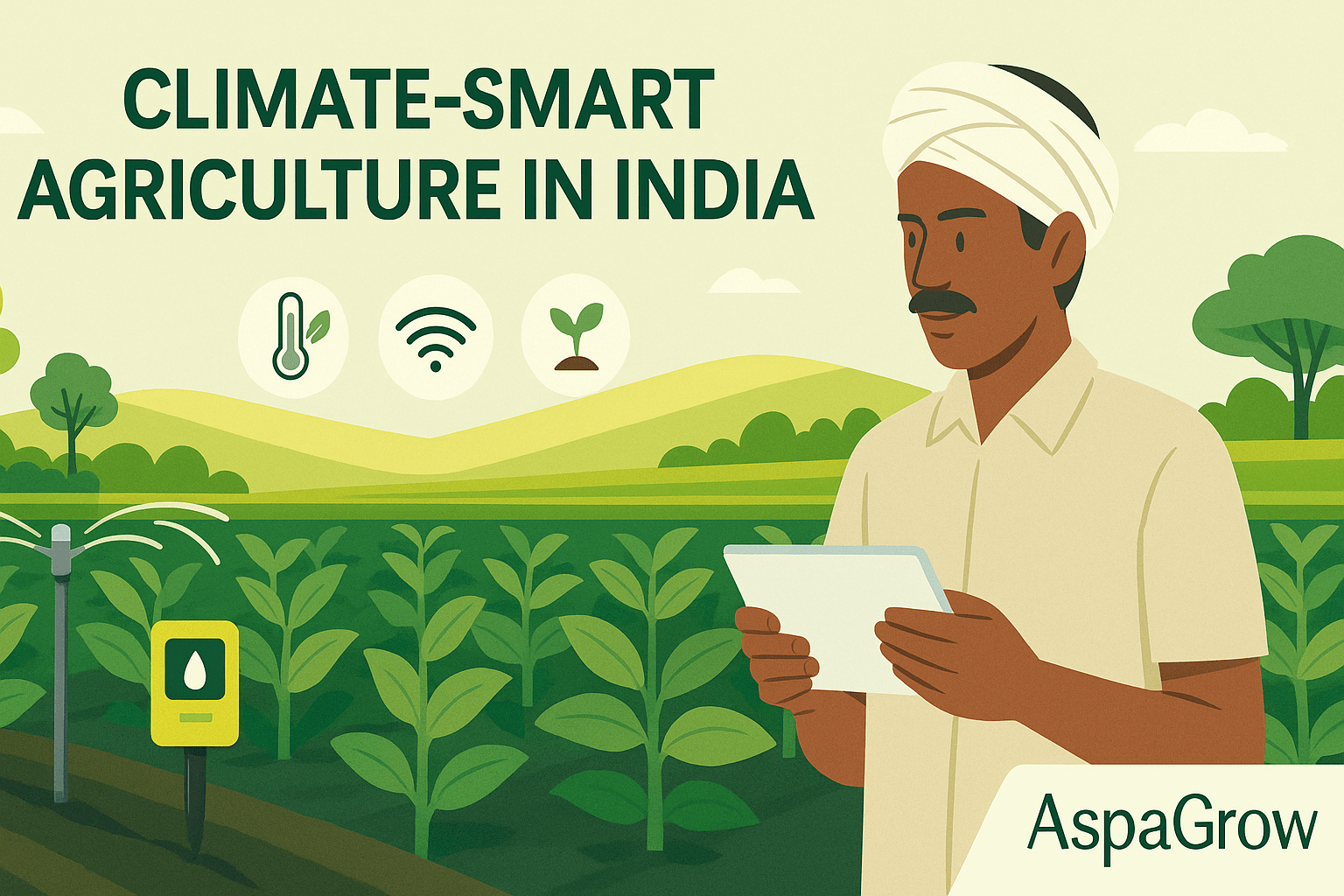
Example: A farmer in Maharashtra using Aspagrow’s IoT-based irrigation system can save up to 40% water, while soil moisture sensors ensure crops receive optimal hydration — improving yield and reducing stress on groundwater.
2. Why Climate-Smart Agriculture is Essential for India
India is one of the countries most vulnerable to climate variability.
- Over 50% of India’s farmland depends on rainfall.
- Floods and droughts are becoming more frequent.
- Soil fertility is declining due to excessive chemical usage.
Climate-smart agriculture provides practical solutions to these issues by integrating:
- Efficient irrigation systems
- Soil health restoration techniques
- Crop diversification
- Digital weather forecasting
It ensures food security while helping farmers adapt to changing environmental conditions.
3. Core Principles of Climate-Smart Agriculture
Climate-smart agriculture revolves around three main principles:
a. Sustainable Productivity
Maximize yield with minimal environmental impact using organic inputs, smart irrigation, and renewable energy.
b. Resilience Building
Equip farmers to adapt to droughts, heat waves, and floods with diversified crops and early warning systems.
c. Emission Reduction
Use technologies like solar-powered pumps, bio-fertilizers, and minimal tillage to reduce carbon emissions from farming.
4. Aspagrow’s Role in Promoting Climate-Smart Farming
Aspagrow, a leader in agri-tech innovation, plays a crucial role in advancing climate-smart agriculture in India. Its goal is to help farmers produce more with fewer resources while maintaining soil and environmental health.
Aspagrow’s Key Climate-Smart Solutions:
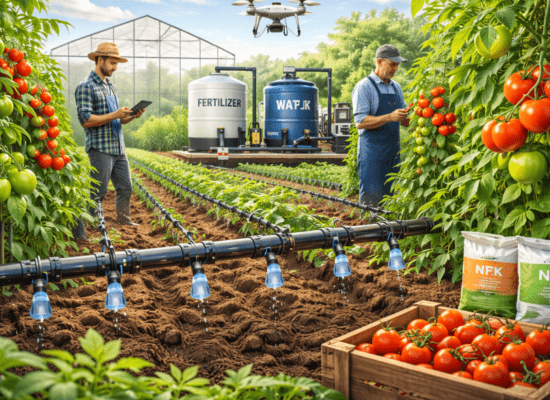
- Smart Irrigation Systems: IoT-enabled controllers that optimize water usage.
- Organic Bio-Fertilizers: Replace chemicals with natural, soil-enriching inputs.
- Precision Soil Monitoring: Real-time soil and weather data for informed decisions.
- Solar-Powered Equipment: Reduce dependency on grid power or diesel.
By combining traditional wisdom with cutting-edge technology, Aspagrow empowers farmers to create sustainable farms that thrive even under climate stress.
5. Techniques and Practices in Climate-Smart Agriculture
a. Drip and Sprinkler Irrigation
These systems provide controlled water delivery directly to roots, preventing wastage and waterlogging.
b. Integrated Nutrient Management
Aspagrow promotes bio-based fertilizers and compost to improve soil structure, enhance nutrient retention, and reduce emissions.
c. Agroforestry
Planting trees alongside crops helps prevent soil erosion, improves biodiversity, and captures carbon.
d. Crop Diversification
Alternating between cereals, legumes, and vegetables improves soil fertility and reduces pest risks.
e. Precision Farming
Using data analytics, sensors, and drones for real-time monitoring of crop health and soil moisture ensures optimal input use.
f. Renewable Energy Use
Solar dryers, pumps, and electric tractors are helping farms become energy independent and eco-friendly.
6. Government Initiatives Supporting Climate-Smart Agriculture
The Indian government has launched several schemes to promote CSA:
- National Mission on Sustainable Agriculture (NMSA) – Promotes soil health and water conservation.
- Pradhan Mantri Krishi Sinchayee Yojana (PMKSY) – Encourages efficient irrigation methods.
- Soil Health Card Scheme – Provides farmers with soil analysis reports to optimize fertilizer use.
- Paramparagat Krishi Vikas Yojana (PKVY) – Supports organic farming and climate-resilient crops.
Aspagrow collaborates with government programs to ensure farmers receive both technical and financial support for adopting these innovations.
7. Economic Benefits of Climate-Smart Agriculture
Farmers adopting CSA experience tangible financial improvements:
- 30–40% increase in crop yield through precision farming.
- 20–30% reduction in input costs using smart irrigation and organic fertilizers.
- Higher profit margins from premium organic produce.
- Long-term soil fertility ensuring sustainable productivity.
Aspagrow’s integrated farm management systems help farmers track progress and measure savings in real time.
8. Challenges in Implementing CSA
While the benefits are clear, several challenges still exist:
- Lack of awareness among smallholder farmers.
- Limited access to affordable technology.
- Inadequate data infrastructure in rural areas.
- Initial investment costs for smart devices.
However, Aspagrow’s farmer outreach programs and low-cost technology kits are bridging this gap — making climate-smart farming accessible even to small-scale farmers.
9. The Future of Climate-Smart Agriculture in India
By 2030, India aims to bring 50% of its farms under climate-smart practices. The shift is already visible in states like Maharashtra, Gujarat, and Tamil Nadu, where smart irrigation and organic inputs are becoming the norm.
The future will see:
- AI-driven crop forecasting
- Real-time soil and water analytics
- Carbon credit programs for sustainable farmers
- Integration of drones and robotics in precision agriculture
With companies like Aspagrow leading the innovation front, India’s green revolution 2.0 will be digital, data-driven, and climate-resilient.
10. How Farmers Can Transition to Climate-Smart Agriculture
Here’s a step-by-step guide for farmers ready to start their CSA journey:
- Assess your land and climate zone using soil and weather data.
- Adopt drip irrigation for water efficiency.
- Switch to organic fertilizers from chemical ones.
- Plant resilient crop varieties suited for local conditions.
- Use Aspagrow’s smart sensors to monitor farm data.
- Diversify crops to reduce risk and improve income.
- Participate in government CSA programs for financial support.
Transitioning to CSA may take 1–2 seasons, but the long-term rewards — higher yield, reduced costs, and environmental sustainability — make it worthwhile.
FAQs | Climate-Smart Agriculture
1. What is Climate-Smart Agriculture?
It’s a farming system that increases productivity, builds resilience to climate change, and reduces emissions. It uses smart tools like drip irrigation, organic fertilizers, and renewable energy to make farming efficient and sustainable.
2. How does Climate-Smart Agriculture benefit farmers?
Farmers save water, reduce fertilizer costs, and achieve higher yields. It also protects soil fertility and ensures long-term sustainability, making farms climate-resilient.
3. What are the best climate-smart practices in India?
Drip irrigation, crop diversification, organic farming, soil testing, and renewable energy use are the most effective CSA practices in India.
4. How is Aspagrow helping farmers with CSA?
Aspagrow provides smart irrigation systems, bio-fertilizers, solar-powered devices, and farm data tools to help farmers adopt CSA easily and affordably.
5. Is Climate-Smart Agriculture profitable?
Yes. By cutting input costs and improving yields, CSA increases farmer income while ensuring long-term sustainability. Farmers can also earn from carbon credits in the future.
Conclusion
Climate-smart agriculture is the future of farming in India. It not only combats climate change but also ensures better income, improved soil health, and sustainable productivity for generations to come.
By blending technology with traditional wisdom, Aspagrow is helping farmers adapt to new environmental realities — creating a balance between profit and planet.
In the next decade, India’s agricultural growth will depend not on how much we produce, but how smartly we produce it — and climate-smart agriculture is the key to that transformation