Banana is one of the most popular fruits in the world and a key crop for millions of farmers, especially in tropical countries. It is rich in nutrition and grows fast, making it an important source of income. However, as consumers become more conscious about food safety and health, the demand for organically grown bananas is rapidly increasing.
Organic banana farming focuses on cultivating bananas without synthetic fertilizers or chemical pesticides. It promotes natural soil fertility, sustainable practices, and eco-friendly crop management. With support from companies like Aspagrow, farmers are now adopting smart, organic methods to produce chemical-free bananas that meet both market demand and environmental needs.
This blog explains the process of organic banana farming, its benefits, the best practices to follow, and how Aspagrow supports farmers in growing healthy and profitable crops.
What is Organic Banana Farming
Organic banana farming is the practice of growing bananas naturally without using synthetic fertilizers, pesticides, or genetically modified seeds. It uses organic compost, green manure, bio-fertilizers, and biological pest control methods. The goal is to produce high-quality bananas while preserving soil health, protecting the environment, and ensuring food safety.
Instead of focusing only on yield, organic farming takes a holistic approach that emphasizes soil regeneration, biodiversity, and long-term sustainability. Aspagrow’s organic products and soil enhancers help farmers improve soil fertility naturally and grow healthy banana plants without depending on harmful chemicals.
Why Choose Organic Banana Farming
Organic banana farming offers several advantages over conventional methods.
- High Market Demand: Consumers are increasingly choosing organic produce, and bananas have a strong market in both domestic and export sectors.
- Healthy Soil: Organic methods improve soil structure, increase microbial activity, and enhance nutrient cycling.
- Environmentally Safe: Natural farming prevents water pollution and reduces the carbon footprint.
- Better Quality Fruits: Organic bananas are tastier, more nutritious, and free from chemical residues.
- Long-Term Sustainability: It maintains soil fertility and reduces input costs over time.
Aspagrow’s organic fertilizers and eco-friendly solutions help farmers achieve all these benefits while improving productivity and profitability.
Ideal Conditions for Banana Farming
Bananas grow best in tropical and subtropical climates. They require warm temperatures, adequate rainfall, and well-drained soil.
- Temperature: 25°C to 35°C
- Rainfall: 1000 to 2500 mm annually
- Soil Type: Loamy soil rich in organic matter
- pH Range: 6.5 to 7.5
- Sunlight: At least 6 to 8 hours daily
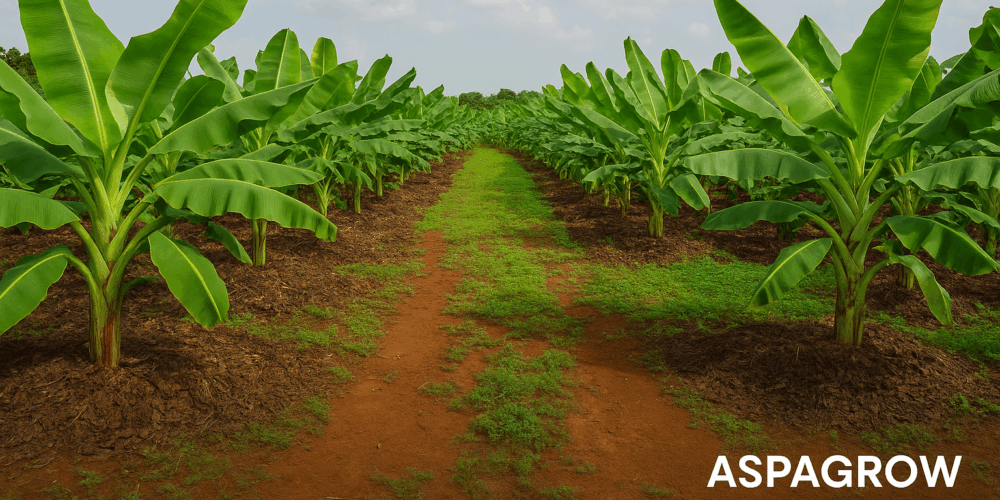
Proper drainage is essential to prevent waterlogging. Mulching with organic matter helps retain moisture, regulate soil temperature, and improve microbial life.
Step-by-Step Guide to Organic Banana Farming
Land Preparation
Prepare the field by plowing two or three times and leveling the soil. Mix farmyard manure or compost thoroughly 30 to 40 days before planting. Adding bio-fertilizers like Azospirillum and Phosphobacteria helps improve nutrient absorption. Aspagrow’s soil booster products can also be applied to enhance microbial life and soil structure.
Variety Selection
Choose high-yielding and disease-resistant varieties suitable for your region. Popular options include Grand Naine, Robusta, Rasthali, Poovan, and Nendran. Use tissue-cultured plants for uniform growth and disease-free production.
Planting
The best time for planting is from June to August during the monsoon or February to March in irrigated areas. Maintain spacing of 1.8 meters by 1.5 meters. Dig pits of 45 cm each and fill them with compost and neem cake.
Organic Manure and Fertilization
Replace chemical fertilizers with natural options such as:
- Farmyard manure: 10 to 15 tons per acre
- Vermicompost: 2 to 3 tons per acre
- Neem cake: 250 to 300 kilograms per acre
- Biofertilizers: Trichoderma, Azospirillum, and Rhizobium
Aspagrow’s organic plant boosters improve nutrient uptake, enhance root growth, and promote overall plant strength naturally.
Irrigation and Water Management
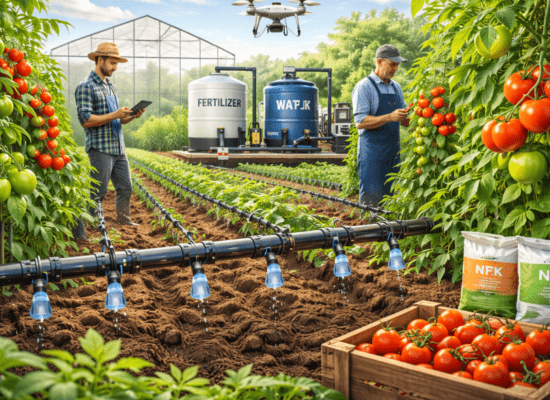
Banana plants need consistent moisture. Use drip irrigation for efficient water use. Smart irrigation systems from Aspagrow can automate water distribution based on soil moisture data, saving up to 40 percent water. Mulching with dry leaves helps retain moisture and control weeds.
Weed and Pest Management
In organic farming, pest and disease management is done through biological and preventive methods.
- Spray neem oil to control aphids and thrips.
- Use Trichoderma for fungal protection.
- Apply a mixture of garlic and cow urine as a natural repellent.
- Grow marigold plants around the field to prevent nematode infestation.
Aspagrow’s Bio-Shield Spray is an effective organic pest control product that protects crops without harming the environment.
Flowering and Fruit Development
Banana plants usually start flowering within seven to eight months. Support plants with bamboo stakes to prevent bending. Applying seaweed extract or humic acid improves fruit size, color, and sweetness. Aspagrow’s Banana Bloom Booster is a natural formula that promotes uniform flowering and fruit development.
Harvesting
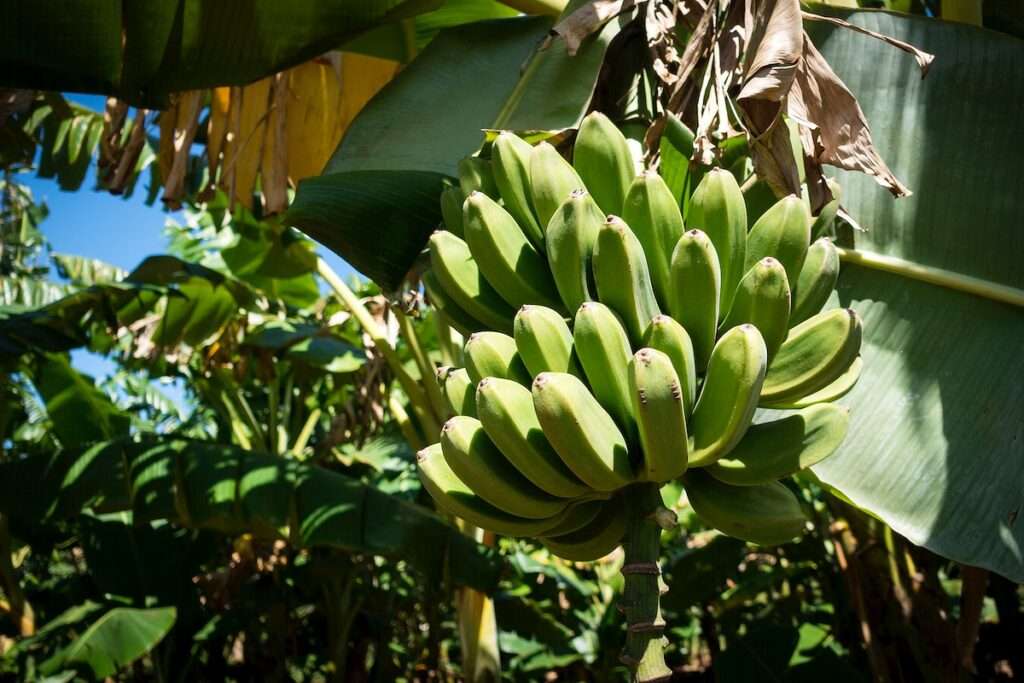
Bananas are ready for harvest within 10 to 12 months, depending on the variety and growing conditions. Harvest when the fruit turns light green and angles on the fingers become rounded. Handle the bunches carefully to avoid bruising. Ripen them naturally at room temperature.
Post-Harvest Handling and Marketing
After harvesting, clean the fruits with mild water to remove dirt. Avoid chemical ripening agents. Use eco-friendly packaging materials such as banana leaves or cardboard crates for transportation.
Farmers can earn better profits by obtaining organic certification from recognized bodies such as India Organic or NPOP. Aspagrow assists farmers in getting certified and connects them with organic buyers and exporters to secure fair prices for their produce.
Benefits of Organic Banana Farming
- Improved soil fertility and microbial health.
- Better moisture retention and reduced erosion.
- Long-term sustainability with lower input costs.
- Higher selling prices due to growing demand for organic fruits.
- Contribution to environmental conservation and food safety.
Organic farming is not just a cultivation method but a long-term investment in soil and community health. Aspagrow supports farmers in maintaining this balance through continuous innovation and technical guidance.
Challenges and Practical Solutions
| Challenge | Solution |
|---|---|
| Initial low yield during conversion period | Use organic boosters and soil enhancers to strengthen early growth |
| Pest and disease management | Apply bio-control agents like Trichoderma and neem extract |
| Certification cost | Aspagrow offers guidance and helps reduce certification expenses |
| Limited organic market access | Aspagrow connects farmers directly with organic food buyers and distributors |
With professional support and smart practices, these challenges can be managed effectively.
Aspagrow’s Role in Organic Banana Farming
Aspagrow is a leading agricultural innovation company that promotes sustainable and organic farming solutions. It provides affordable and practical tools for both small and large-scale farmers.
The company’s key services include:
- Organic fertilizers, bio-stimulants, and pest control products
- Smart irrigation and precision water management systems
- Soil testing and nutrient management programs
- Farmer training and certification support
Aspagrow’s integrated approach ensures that organic banana farmers can maintain soil health, increase productivity, and achieve higher profitability while protecting the environment.
FAQs | Organic Banana
Lets have dicussion
1. What is the difference between organic and conventional banana farming?
Organic banana farming uses natural inputs such as compost, vermicompost, and neem cake, while conventional farming uses synthetic fertilizers and pesticides. Organic farming focuses on soil health and sustainability, whereas conventional methods prioritize short-term yield.
2. How can banana pests be controlled organically?
Pests can be managed using neem oil sprays, Trichoderma for fungal protection, and natural repellents made from garlic or cow urine. Companion planting with marigold also helps prevent nematode attacks. Aspagrow’s Bio-Shield product offers safe pest management.
3. Is organic banana farming profitable?
Yes, organic banana farming is profitable. Although yields may be slightly lower initially, organic bananas sell at premium prices in domestic and export markets. Lower input costs and higher quality output result in better overall profit.
4. What fertilizers are used in organic banana farming?
Organic farming uses natural fertilizers such as farmyard manure, vermicompost, bone meal, and biofertilizers like Azospirillum and Rhizobium. Aspagrow’s Soil Revive Booster improves soil fertility and root development.
5. How long does it take for banana plants to mature in organic farming?
Bananas take about ten to twelve months to mature, depending on the climate and variety. Regular irrigation, mulching, and organic boosters help maintain steady growth and healthy fruit formation.
Conclusion
Organic banana farming represents the future of sustainable agriculture. It not only ensures chemical-free food for consumers but also restores soil health and environmental balance. By adopting natural fertilizers, biological pest control, and smart irrigation systems, farmers can achieve better yields and profitability without harming nature.
Aspagrow is empowering farmers to make this shift with its range of organic and smart agricultural products. Through continuous innovation and farmer education, Aspagrow is helping create a generation of growers who believe in clean, sustainable, and profitable farming.
The future of banana cultivation is organic, eco-friendly, and technology-driven, and Aspagrow is proud to lead this transformation across India and beyond.