The world of exotic fruits is full of surprises, but few can match the charm and mystery of the Blue Banana, also popularly known as the Blue Java Banana. Famous for its stunning blue skin and ice-cream-like texture, this tropical fruit is becoming a global sensation in 2025. Farmers, food lovers, and health enthusiasts around the world are fascinated by its unique flavor, soft texture, and nutritional value.
Whether you want to grow it, eat it, or simply learn about it, the Blue Banana offers an experience unlike any other banana variety. In this blog, we explore its origin, benefits, growing conditions, taste profile, and why it is becoming a trend in tropical agriculture.
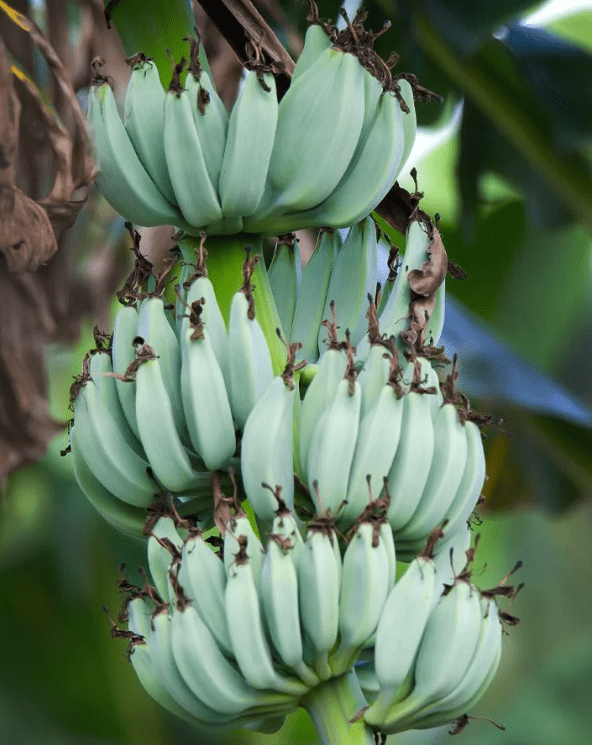
Fruit is blue at the start, but it turns yellow when ripe.
1. What Exactly Is a Blue Banana?
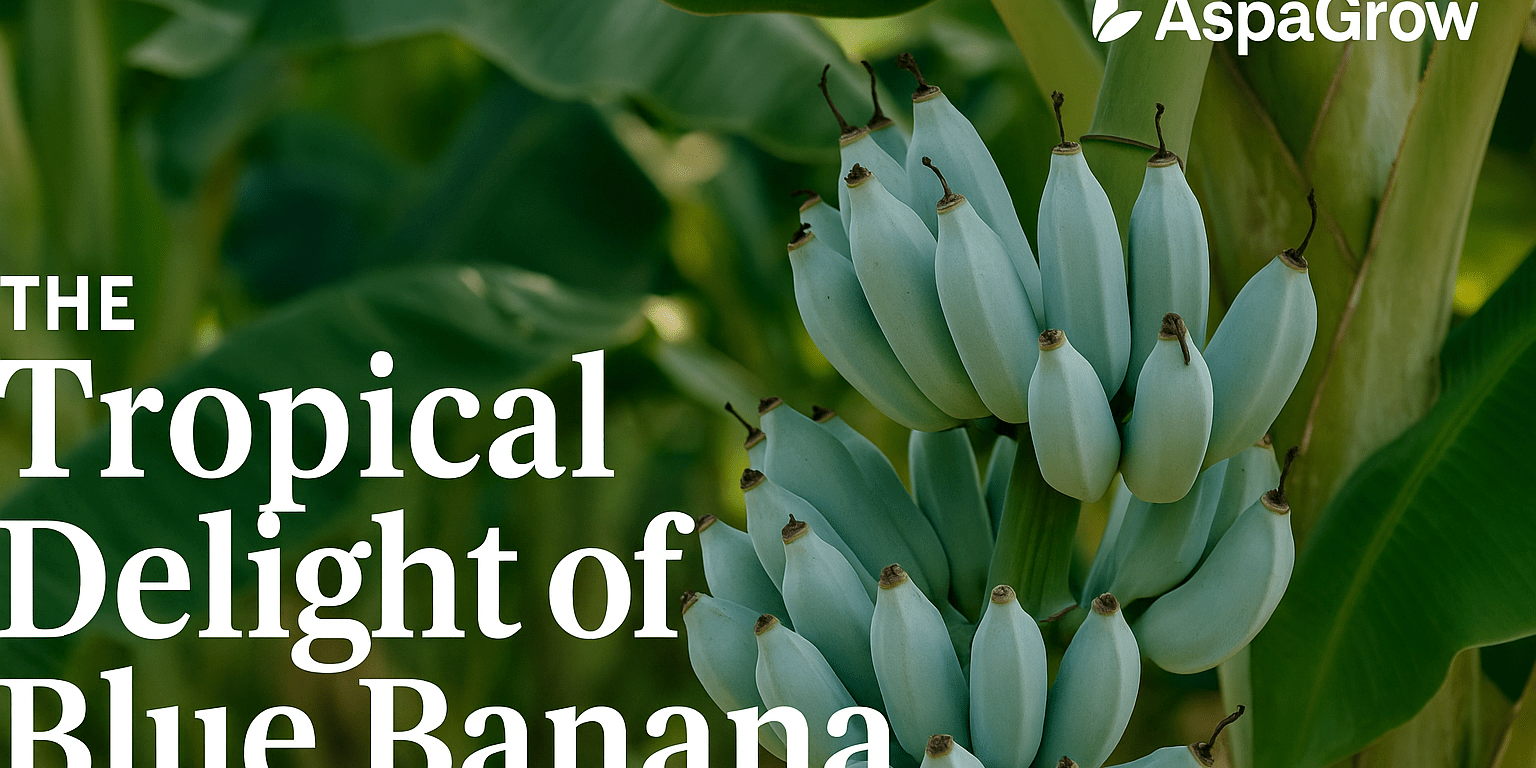
The Blue Banana (Blue Java Banana) is a naturally occurring variety known for its sky-blue to aqua-colored peel during the immature stage. As it ripens, the peel turns into a pale blue-silver shade, giving it a magical, fairy-tale appearance.
Unique features:
- Naturally blue peel when unripe
- Soft, creamy texture like vanilla ice cream
- Sweet flavor with hints of vanilla and custard
- Popularly called “Ice Cream Banana”
- Grows in tropical and subtropical regions
- Wind-resistant and cold-tolerant compared to other bananas
Its beauty and flavor make it a rare treat in the world of fruit lovers.
2. What Does the Blue Banana Taste Like?
The Blue Banana is famous for its dessert-like flavor.
When fully ripe, the fruit tastes like:
✔ Vanilla Ice Cream
✔ Custard
✔ Sweet Cream
✔ Soft Banana Smoothie
Its creamy texture makes it perfect for smoothies, shakes, desserts, and even dairy-free ice cream recipes.
3. Health Benefits of Blue Banana
Blue Bananas are not just beautiful—they are incredibly nutritious. They offer:
a. High Fiber Content
Improves digestion and supports gut health.
b. Rich in Potassium
Maintains heart health and controls blood pressure.
c. Natural Energy Booster
Perfect pre-workout fruit.
d. Vitamin B6 & C
Strengthens immune system and boosts metabolism.
e. Good for Skin
Antioxidants help reduce inflammation and promote glowing skin.
f. More Resistant Starch
Great for people looking to control sugar levels.
The fruit is ideal for children, athletes, and anyone looking for a healthy sweet option.
4. Where Do Blue Bananas Grow?
Blue Bananas grow mainly in:
- Southeast Asia
- Hawaii
- Fiji
- India’s southern regions
- Central America
- Caribbean Islands
They require warmth, humidity, and fertile soil, making them perfect for tropical agriculture. Many Indian farmers have started planting them due to rising demand.
5. Climate & Soil Requirements
The Blue Banana thrives best under:
Climate:
- Full sunlight
- Warm temperatures (20–35°C)
- High humidity
- Tolerant to mild cold and strong wind
Soil
- Loamy and well-drained
- Rich in organic matter
- pH between 6.5–7.5
Using smart irrigation and organic nutrition can significantly improve yield.
6. How to Grow Blue Bananas
Step-by-Step Guide
Step 1: Select High-Quality Saplings
Use healthy suckers or tissue-cultured plants for better yields.
Step 2: Land Preparation
Add compost, organic manure, and soil boosters.
Step 3: Spacing
Plant at 1.5 m × 1.8 m spacing for proper airflow.
Step 4: Irrigation
Drip irrigation works best. Keep soil moist, not waterlogged.
Step 5: Nutrition
Use a balanced combination of:
- Organic fertilizers
- Potassium-rich boosters
- Banana-specific micronutrients
Step 6: Pest Management
Use neem oil and bio-sprays for organic protection.
Step 7: Harvesting
Blue Bananas ripen in 9–12 months depending on climate.
7. Why Blue Banana Farming Is Trending in 2025
Farmers are adopting Blue Banana farming because:
✔ High market demand
✔ Unique color attracts premium buyers
✔ Strong export potential
✔ Good survival in tropical climates
✔ Higher profit margins than regular bananas
Restaurants, hotels, and ice cream brands love this fruit for its flavor and visual appeal.
8. AspaGrow’s Support for Blue Banana Farming
AspaGrow offers powerful farming solutions such as:
- Smart irrigation systems
- Organic banana fertilizers
- Pest & disease protection
- Soil booster formulas
- Weather-adaptive farming tools
Farmers using AspaGrow solutions see 10–20% higher yield and better fruit quality.
FAQ | Blue Banana
Lets have some dicussion
1. Is the Blue Banana a real fruit or just an internet myth?
Yes, the Blue Banana is absolutely real. Scientifically known as the Blue Java Banana, it is a naturally occurring banana variety native to Southeast Asia and later introduced to Hawaii, Fiji, and other tropical climates. Its unique bluish peel comes from natural pigments that appear during the unripe stage. As it ripens, the peel turns pale silver-green. The fruit is globally famous for its ice-cream-like texture and vanilla flavor, making it one of the rare tropical bananas trending worldwide.
2. Why does the Blue Banana taste like vanilla ice cream?
The Blue Banana has a soft, creamy texture due to its high natural pectin and sugar content. When fully ripe, the fruit develops a flavor similar to vanilla ice cream mixed with sweet banana and custard, earning it the nickname “Ice Cream Banana.” Many vegans and health-conscious people use it as a dairy-free ice cream substitute in smoothies and frozen desserts. Its flavor profile makes it one of the most unique and desirable banana varieties in the world.
3. Can Blue Bananas grow in Indian climate conditions?
Yes, Blue Bananas grow very well in India, especially in warm and humid states such as Kerala, Tamil Nadu, Karnataka, Andhra Pradesh, West Bengal, and Maharashtra’s coastal belts. They need temperatures between 20–35°C and well-drained soil rich in organic matter. Blue Java plants are also more cold-tolerant and wind-resistant than many standard banana varieties. AspaGrow provides sapling guidance, soil boosters, and irrigation solutions that help Indian farmers successfully cultivate this exotic fruit.
4. Is Blue Banana farming profitable in 2025?
Absolutely! Blue Banana farming is gaining popularity due to its high demand, limited supply, and premium market price. Restaurants, smoothie brands, premium fruit stores, and export companies are actively seeking the Blue Java variety for its color, texture, and flavor. Farmers can earn 20–40% higher profit compared to traditional bananas because consumers are willing to pay extra for rare fruits. With AspaGrow’s precision farming tools and organic nutrition boosters, farmers can increase yield and reduce crop loss, making the crop even more profitable.
5. How long does it take to grow and harvest Blue Bananas?
Blue Bananas typically take 9–12 months from planting to harvest, similar to the Grand Naine and Robusta varieties. However, yield time can vary depending on climate, irrigation, soil quality, and care practices. With smart irrigation and soil health management from AspaGrow, farmers can maintain consistent moisture and nutrient supply, helping the plant grow faster and produce stronger, sweeter fruit.
Conclusion
The Blue Banana is more than just a fruit—it’s a tropical treasure. From its enchanting color to its ice-cream-like flavor, it is winning hearts worldwide. For farmers, it’s a high-value crop. For consumers, it’s a delicious and healthy superfruit.
With the right soil, climate, and smart farming tools from AspaGrow, growing Blue Bananas can become a profitable and enjoyable journey.
The future is bright, flavorful, and beautifully blue!