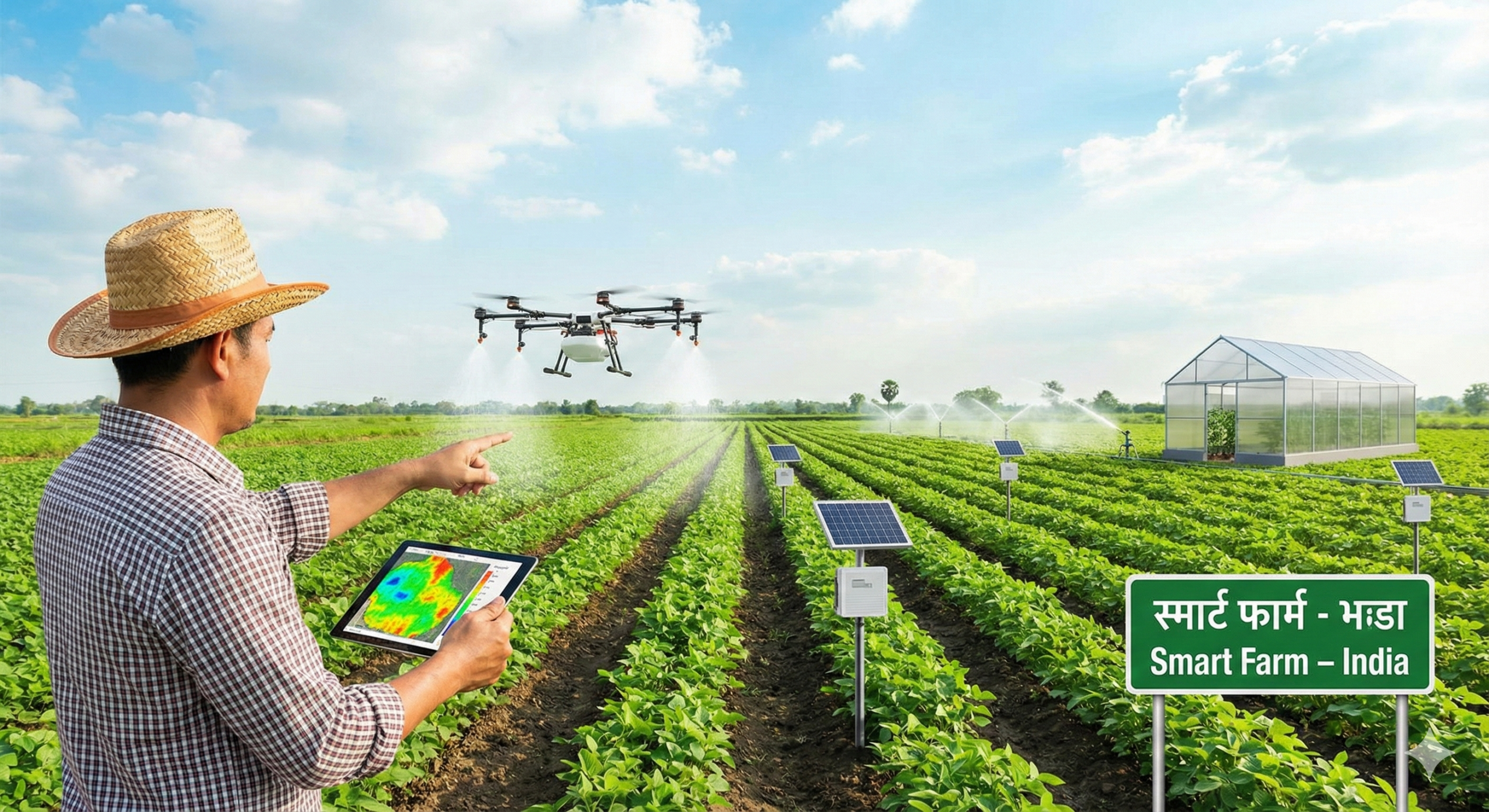
India has always been known as an agricultural country. For generations, farming has been the backbone of rural life and the economy. But today, farming is no longer limited to traditional tools, monsoon dependence, and manual labor. A big transformation is happening across villages and farmlands. This transformation is called Smart Farming in India.
Smart farming uses modern technology like sensors, data, mobile apps, artificial intelligence, and automation to make agriculture more efficient and profitable. With rising costs, unpredictable weather, water scarcity, and labor shortage, Indian farmers need smarter solutions. This is where companies like Aspagrow are playing an important role by supporting farmers with technology-driven farming solutions.
In this blog, we will explain what smart farming is, why it is important in India, how technology is empowering modern farmers, and how Aspagrow is helping farmers move towards a sustainable future.

What Is Smart Farming in India?
Smart farming in India means using advanced technologies to improve crop production, reduce waste, and manage resources better. It focuses on data-driven farming, where decisions are taken based on real-time information instead of guesswork.
Earlier, farmers depended mainly on experience, seasonal patterns, and local advice. Today, smart farming combines that experience with technology to get better results.
Smart farming includes:
- Precision agriculture
- IoT-based farm monitoring
- Smart irrigation systems
- AI-based crop advisory
- Weather forecasting tools
- Digital marketplaces
With the help of smartphones and internet access, even small farmers can now use smart farming techniques.
Why Smart Farming Is Important for India
India has more than 50% of its population dependent on agriculture. However, farmers face many challenges like low income, climate change, soil degradation, and rising input costs. Smart farming in India is important because it addresses these problems practically.
1. Climate Change Impact
Rainfall patterns are changing, summers are getting hotter, and extreme weather events are increasing. Smart farming tools help farmers prepare in advance and reduce crop damage.
2. Water Scarcity
Water is becoming limited in many parts of India. Smart irrigation helps farmers use water only when needed, saving both water and electricity.
3. Rising Costs
Seeds, fertilizers, pesticides, and labor are getting expensive. Smart farming helps reduce unnecessary usage and lowers overall cost.
4. Need for Higher Yield
To feed a growing population, India needs higher crop productivity. Smart farming increases yield without harming soil health.
Key Technologies Used in Smart Farming in India
Let us understand how technology is actually used on the ground.
1. Precision Agriculture
Precision agriculture is one of the core parts of smart farming in India. It means applying the right input, at the right place, at the right time.
Using GPS, sensors, and farm data, farmers can:
- Apply fertilizers only where required
- Reduce overuse of chemicals
- Improve soil health
- Increase crop quality
Aspagrow supports farmers by helping them understand precision-based farming methods that suit Indian soil and crop conditions.
2. Smart Irrigation Systems
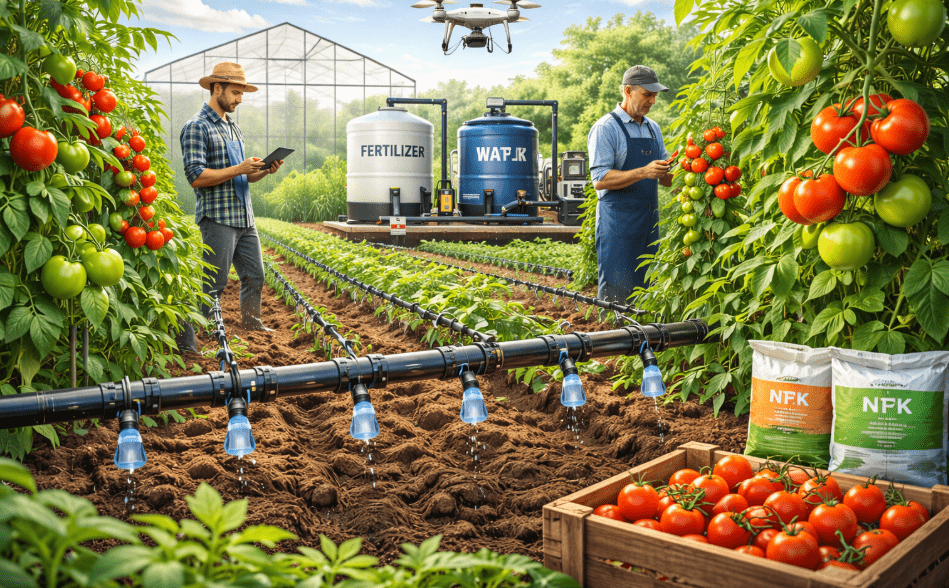
Water wastage is a major issue in traditional farming. Smart irrigation systems use soil moisture sensors and weather data to decide when and how much water is needed.
Benefits include:
- Less water consumption
- Lower electricity bills
- Better crop growth
- Reduced soil erosion
In states like Maharashtra, Gujarat, and Karnataka, smart irrigation has already shown great results for farmers.
3. Internet of Things (IoT) in Farming
IoT devices collect real-time data from farms. These devices are placed in soil, water sources, and fields.
They help farmers monitor:
- Soil moisture
- Temperature
- Humidity
- Crop health
This data is sent to mobile apps, allowing farmers to take quick action. Aspagrow focuses on making such technologies farmer-friendly and easy to understand.
4. Artificial Intelligence and Machine Learning
AI is changing smart farming in India by helping farmers predict problems before they happen.
AI tools can:
- Detect crop diseases early
- Suggest best sowing time
- Recommend fertilizers
- Predict yield
Instead of reacting to loss, farmers can prevent it. This saves money and improves confidence.
5. Weather Forecasting Technology
Weather plays a huge role in Indian agriculture. Advanced weather forecasting tools give accurate, location-based predictions.
Farmers can plan:
- Sowing and harvesting
- Irrigation schedules
- Pesticide spraying
Aspagrow believes that timely weather information can protect farmers from unexpected losses.
6. Drones in Agriculture
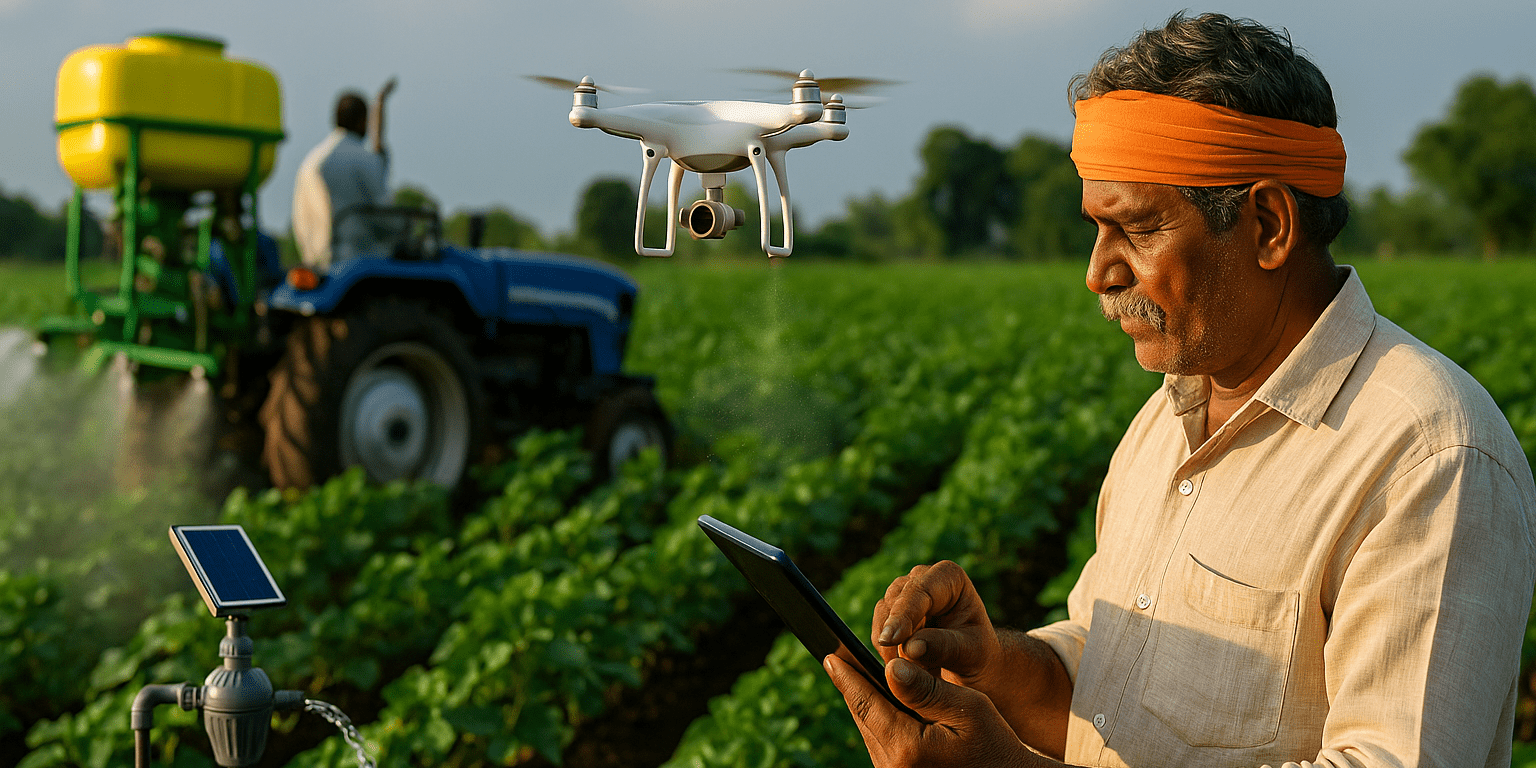
Drones are becoming popular in smart farming in India, especially for large farms.
They are used for:
- Crop monitoring
- Spraying pesticides
- Mapping farmland
- Checking crop stress
Drones save time, reduce labor cost, and ensure even spraying.
7. Digital Platforms and Mobile Apps
Smart farming is incomplete without digital access. Mobile apps connect farmers to:
- Market prices
- Advisory services
- Government schemes
- Weather updates
Aspagrow works towards bridging the gap between farmers and digital agriculture solutions.
How Smart Farming Is Empowering Indian Farmers
Smart farming in India is not just about machines and apps. It is about empowering farmers.
Better Decision Making
Farmers now take decisions based on data, not assumptions. This reduces risk.
Higher Income
With better yield and lower cost, farmers earn more from the same land.
Reduced Dependency
Farmers become less dependent on middlemen and unpredictable factors.
Youth Engagement
Technology is attracting young people back to agriculture, making farming a respected profession again.
Role of Aspagrow in Smart Farming in India
Aspagrow is committed to supporting modern agriculture by promoting smart farming practices suitable for Indian farmers.
Aspagrow focuses on:
- Educating farmers about new technologies
- Providing practical farming solutions
- Supporting sustainable agriculture
- Encouraging innovation at the grassroots level
By combining traditional farming knowledge with modern tools, Aspagrow helps farmers grow smarter, not harder.
Challenges in Adopting Smart Farming
While smart farming in India has huge potential, there are challenges too.
- High initial cost
- Limited awareness
- Digital literacy gaps
- Internet connectivity in rural areas
However, with government support, private players like Aspagrow, and farmer education, these challenges can be overcome step by step.
The Future of Smart Farming in India
The future of Indian agriculture is smart, sustainable, and technology-driven. In the coming years, we will see:
- More AI-powered tools
- Affordable smart devices
- Increased farmer training
- Strong agri-tech ecosystems
Smart farming in India will not replace farmers; it will empower them to grow better, earn more, and protect the environment.
FAQs | Smart Farming in India
1. What is smart farming in India?
Smart farming in India is the use of modern technology like sensors, AI, and data to improve crop yield, reduce costs, and manage resources efficiently.
2. Is smart farming suitable for small farmers in India?
Yes, many smart farming tools are affordable and designed for small and marginal farmers with simple mobile-based solutions.
3. How does smart farming help increase income?
By reducing input waste, improving yield, and preventing crop loss, smart farming helps farmers earn more profit.
4. What role does Aspagrow play in smart farming?
Aspagrow supports farmers by promoting technology-based farming solutions, education, and sustainable practices.
5. What is the future of smart farming in India?
The future is technology-driven with AI, IoT, and digital platforms making farming more efficient, sustainable, and farmer-friendly.
Conclusion
Smart farming in India is no longer a concept of the future. It is happening right now. Technology is giving farmers the power to overcome challenges, improve productivity, and secure their livelihoods.
With the support of innovative platforms like Aspagrow, Indian farmers are stepping into a new era where agriculture is efficient, profitable, and sustainable. The journey may have challenges, but the direction is clear—smart farming is the way forward for Indian agriculture.