
Agriculture is undergoing one of the biggest transformations in history. For generations, farming relied heavily on human labor, manual tools, and experience-based decisions. But today, a powerful new partner has stepped into the fields — robots.
Once seen only in factories or science-fiction movies, robots are now ploughing fields, planting seeds, harvesting fruits, monitoring crops, and making agriculture smarter, faster, and more efficient than ever before. This shift is not just about convenience; it’s about survival. As labor shortages rise, farming costs increase, and climate conditions become unpredictable, automation is helping farmers grow more food with fewer resources.
AspaGrow brings you a complete look at how robots are reshaping the farming industry, helping farmers increase yields, reduce waste, and build more sustainable agricultural systems.
Imagine waking up and, along with the sunrise, a quiet fleet of machines rolls into your fields. No shouting, no rush to gather laborers—just robots calmly getting to work. This isn’t science fiction anymore. Robots on the farm are becoming a real part of modern agriculture, and they’re changing how food is grown, harvested, and delivered to us.
In this blog, let’s explore how farm robots boost profits, cut waste, solve labor problems, and what challenges still stand in the way.
Robots and Precision Farming: Profit in Every Row
In traditional farming, a lot of decisions are based on experience, guessing, or “what we did last year.” Robots flip that model. They use data and sensors to make precise decisions about:
- Where to plant
- How deep to plant
- How much fertilizer to use
- When to irrigate
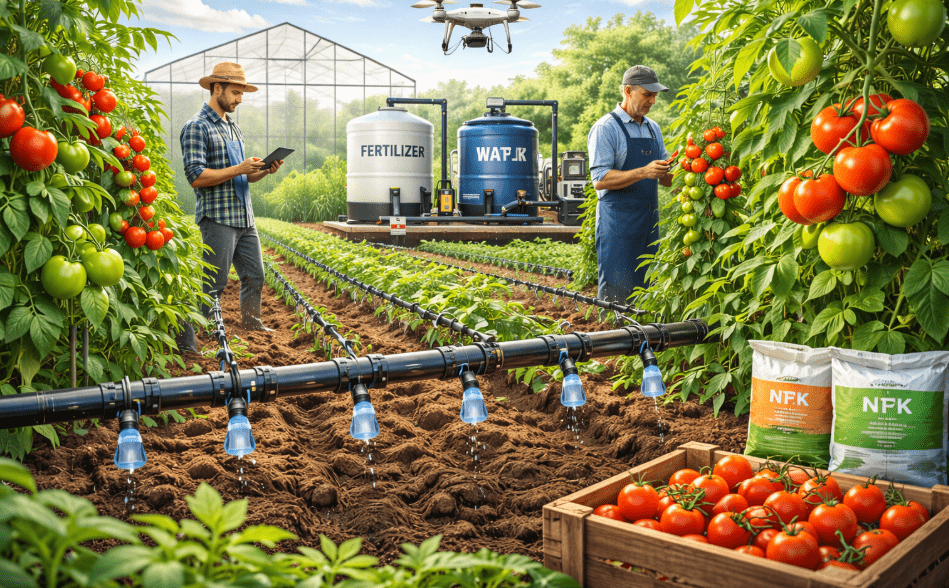
They can analyze soil conditions, weather, and plant health in real time, then act on that information instantly. Instead of treating a whole field the same, robots treat each plant or area according to its actual need.
The result?
- More uniform crops
- Higher yields
- Less wasted seed, fertilizer, and water
Whether it’s corn, wheat, apples, or strawberries, robots act like an expert team walking your fields 24/7, making sure every plant gets exactly what it needs.

Labor Savings: The Robots Never Clock Out
One of the biggest headaches in farming is labor—finding it, training it, and keeping it. Robots help by taking over many of the repetitive, physically demanding tasks, such as:
- Planting and seeding
- Weeding
- Spraying
- Harvesting
- Transporting produce or inputs
Unlike human workers, robots don’t need breaks, wages, benefits, or holidays. They can operate through the night, in heat or cold, and during peak seasons when human labor is most expensive and hardest to find.
This doesn’t mean people are no longer needed. Instead, humans move into more skilled roles—monitoring systems, managing data, planning crops, or repairing machines—while the robots handle the heavy lifting
Resource Efficiency: More Food, Less Waste
Robots are not only good for profits—they’re good for the planet too.
Because they operate with precision, robots help farms:
- Use less water by irrigating only where needed.
- Reduce chemical use with targeted spraying.
- Cut fuel use with optimized routes and lighter machines.
This means cleaner soil, less polluted water, and a smaller carbon footprint. Healthier plants lead to better quality produce, which can often be sold at a higher price. In short, greener fields often lead to a fatter wallet.
Crop Monitoring: Tiny Detectives in the Field
Modern agricultural robots don’t just do physical work; they also watch, measure, and report.
Small field robots and drones can:
- Scan leaves for early signs of disease
- Spot pest outbreaks before they spread
- Detect nutrient deficiencies
- Monitor soil moisture and temperature
All of this is fed into software that gives farmers a clear picture of what’s happening in their fields. With early warnings, farmers can act before small problems become big, expensive ones.
It’s like having a team of mini-detectives patrolling the farm, sending live updates to your phone or computer.
Robots as a Marketing Superpower
There’s another unexpected benefit of robots on the farm: they’re great for marketing.
Customers today care about:
- Where their food comes from
- How it’s grown
- Whether it’s produced sustainably
Images and videos of robot-assisted farms instantly grab attention. A robot harvesting strawberries or tending rows of lettuce signals innovation, care, and efficiency. Shared on social media or displayed on websites, these visuals can help farmers:
- Build a strong, modern brand
- Attract new buyers and contracts
- Stand out in crowded markets
In other words, robots don’t just help grow food—they help grow your farm’s reputation.
The Upside: Advantages of the Robo-Farm
To summarize, here are some of the biggest advantages robots bring to agriculture:
The Other Side: Real Challenges of Farming with Robots
Of course, it’s not all smooth sailing. Bringing robots into agriculture comes with real challenges:
1. High Upfront Costs
Robots and automated systems can be expensive. For smaller farms, the initial price can feel out of reach, even if the long-term savings are attractive.
2. Need for New Skills
Farmers now have to understand software, sensors, and coding basics, not just seeds and soil. Training and support are crucial.
3. No “One-Size-Fits-All” Robot
Every farm is different—soil type, crop variety, field shape, climate. Robots often need customization to work well in a specific environment.
4. Data Privacy and Security
Robots generate and transmit a lot of data: yields, soil maps, farm layouts. Protecting that information from misuse or hacking is an ongoing concern.
5. Losing the “Human Touch”
Some worry that too much automation will strip farming of its traditional character and connection to nature.
6. Maintenance and Downtime
Robots can break down, just like tractors. Repairs, software updates, and spare parts all need planning and budgeting.
7. Unpredictable Nature
Farming will always involve surprises—storms, pests, droughts. Robots must be robust enough to handle these twists or farmers need backup plans.
Finding Balance: Humans and Robots Working Together
So how do farmers make the most of robots while managing these challenges?
- Think long-term, not just upfront. View robots as investments, like buying a tractor or building a shed.
- Start small. Automate one task at a time—maybe weeding or spraying—then expand as you gain confidence.
- Choose the right tools. Look for robots that match your crops, field size, and budget.
- Protect your data. Work with companies that take security seriously.
- Keep people at the heart. Robots should support farmers, not replace their knowledge and judgment.
When used wisely, robots can be the perfect dance partners in the “robo-balance” of modern farming—machines doing the repetitive work, humans making the big decisions.
Real-World Examples: Robots Already on the Job
Robots are not just ideas on paper; they’re already working on farms around the world.
Strawberry-Picking Robots
On some berry farms, robots identify ripe strawberries, pick them gently, and place them in punnets. These systems have boosted yields and reduced waste, especially during times when labor is scarce.
Robo-Weeders
Machines equipped with cameras and AI travel between rows of crops, identifying and removing weeds without chemicals. On lettuce farms, some of these robots have reduced herbicide usage by up to 90%.
Grape-Harvesting in Vineyards
Robots like “GrapeRover” navigate vineyards, delicately harvesting grapes at the perfect level of ripeness. The result is higher-quality fruit and more consistent harvest timing.
Robot Pollinators
Tiny robotic “bees” are being tested to help pollinate fruit trees in areas where natural bee populations are struggling. They buzz from flower to flower, improving pollination and fruit size.
Poultry and Dairy Automation
In poultry houses, robots collect eggs from the floor, monitor bird welfare, and even control lighting systems to keep flocks calm and productive.
In dairies, robotic milking systems allow cows to choose when to be milked, improving comfort and milk yield.
The Companies Leading the Charge
Several innovative companies are bringing these robots to life:
- Agrobot – Known for robotic harvesters in fruit farming.
- Blue River Technology – Builds smart machines that identify and remove individual weeds.
- Octinion – Specializes in gentle fruit-picking robots.
- Small Robot Company – Designs small field robots for planting and monitoring crops.
- Burro – Creates autonomous carriers that haul tools, crates, and produce around the farm.
These pioneers show just how creative the future of farming can be
A Robotic and Brilliant Farming Future
The story of robots on the farm is ultimately a story of partnership. Technology brings speed, accuracy, and endurance. Farmers bring wisdom, intuition, and a deep connection to the land.
Together, they’re shaping a new kind of agriculture—one that is:
- More productive
- More sustainable
- Less wasteful
- And surprisingly exciting
So next time you bite into a sweet strawberry or pour a glass of wine, there’s a good chance a robot helped make it possible. The farm of the future isn’t far away. It’s here, rolling quietly across the fields, powered by code, sensors, and the timeless desire to grow food better than ever before.
1. Why Robots Are Entering the Farm: The Need for Automation
Across the world, farmers face challenges such as:
- Labor shortages during peak seasons
- Increasing production costs
- Declining soil health
- Water scarcity
- Pressure to produce more food for a growing population
Robots offer solutions by performing repetitive, time-consuming, and physically demanding tasks with precision. They reduce dependence on large workforces, help optimize resources, and ensure timely farm activities — which directly impacts productivity.
Automation is no longer a luxury. It has become a necessity for modern, profitable farming.
2. Types of Robots Used in Agriculture
Robots are not one-size-fits-all. Farming uses a wide range of automated machines:
a. Autonomous Tractors
These tractors can plough, plant, and spray without a driver. Using GPS and AI, they follow precise routes and adjust speed and depth automatically.
b. Harvesting Robots
Fruit-picking robots identify ripe produce, pick it gently, and place it into bins — ensuring minimum damage.
c. Weeding Robots
Robots equipped with lasers or mechanical arms remove weeds without chemicals, making farming more eco-friendly.
d. Drones
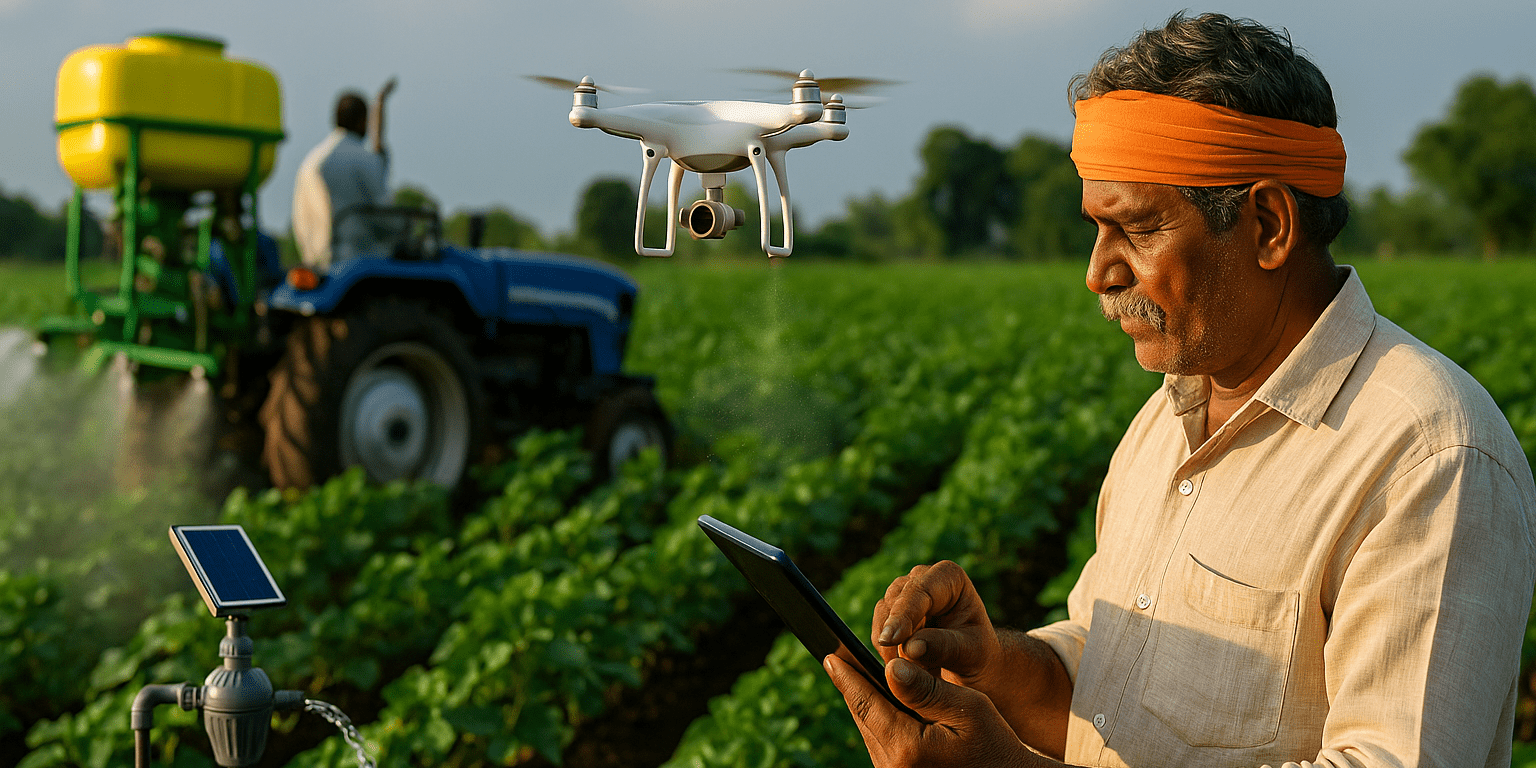
Drones capture real-time images to monitor plant health, moisture levels, pest presence, and more.
e. Irrigation Robots
Smart irrigation robots water plants based on soil moisture levels, preventing overuse of water.
f. Livestock Robots
These robots help with feeding, milking, monitoring health, and maintaining livestock hygiene.
g. Delivery Robots (Carriers)
Robots transport fertilizers, tools, or harvested produce across the farm, reducing manual effort.
Every robot serves one purpose: to increase efficiency and productivity while reducing human workload.
3. How Robots Improve Precision Farming
Robots bring an unmatched level of accuracy to farming operations.
✔ Precision Planting
Robots plant seeds at perfect depths and distances, resulting in uniform growth and maximum yields.
✔ Precision Spraying
Robots spray fertilizers or pesticides only where required, reducing chemical usage and protecting the environment.
✔ Data-Driven Decisions
Using sensors and cameras, robots gather crop data such as:
- Leaf color
- Soil moisture
- Disease symptoms
- Pest activity
Farmers can act quickly based on this data, preventing losses and improving overall crop health.
This is farming with intelligence — not guesswork.
4. Resource Efficiency: Saving Water, Energy & Chemicals
One of the biggest advantages of robots on the farm is efficiency. Automation minimizes waste and ensures resources are used responsibly.
Water Efficiency
Smart irrigation systems provide water only when plants truly need it, reducing water use by up to 50%.
Chemical Reduction
Robots detect the exact location of pests or weeds and apply micro-doses, reducing chemical usage dramatically.
Energy Savings
Electric or solar-powered robots consume less energy than traditional machinery.
Sustainable farming becomes easier, and operating costs become lower — a win-win for the farmer and the planet.
5. Crop Monitoring: Robots as the Farmer’s Eyes
Monitoring fields manually is time-consuming, especially for large farms. Robots and drones help farmers gain a bird’s-eye view or close-up details without stepping into the field.
Robots detect:
- Early disease signs
- Pest outbreaks
- Crop stress from lack of nutrients
- Uneven growth
- Waterlogging or drought patches
Early action means saved crops, reduced losses, and improved yields.
6. Automation Challenges: What Farmers Should Know
While robotic farming is exciting, it comes with challenges:
a. High Initial Investment
Advanced robots are expensive, especially for small farms.
b. Technical Knowledge Required
Farmers need training to operate and maintain robotic systems.
c. Maintenance Costs
Robots require regular servicing and updates.
d. Connectivity Issues
Automation systems depend on strong internet or GPS signal.
e. Adaptation to Different Farm Types
Robots must be customized to suit crops, terrain, and climate.
Despite challenges, more affordable robotics solutions are emerging each year — making automation accessible even to smallholder farmers. AspaGrow actively supports farmers in adopting technology with guidance and training.
7. Real-Life Examples of Robots Transforming Farming
Automation is already making a big impact worldwide:
Case Study 1: Strawberry Harvesting Robots
Robots identify ripe strawberries, pick them gently, and reduce harvest time by 40%.
Case Study 2: Vineyards Using Grape-Harvesting Robots
Robots pick delicate grapes without bruising them, increasing yield quality.
Case Study 3: Weed-Removing Robots
AI-powered weed bots reduce herbicide usage by up to 90%, saving money and protecting soil health.
Case Study 4: Robotic Milking Systems
Cows enter the milking unit voluntarily, improving milk quality and reducing stress.
These success stories prove that robots are not just useful — they are transformative.
8. Leading Companies Creating Farm Robots
Several innovative companies are shaping the future of agriculture automation:
Agrobot – Harvesting robots
Blue River Technology – AI weed-control robots
Octinion – Precision fruit-picking robots
Small Robot Company – Micro robots for soil and crop monitoring
Burro – Autonomous carriers that transport farm loads
AspaGrow believes farmers can benefit greatly by adopting technologies from these global leaders.
FAQs | Robots on the Farm
1. How do robots help farmers?
Robots perform repetitive and labor-intensive tasks like planting, weeding, harvesting, and monitoring. This saves time and money while improving crop quality.
2. Are robots too expensive for small farmers?
Prices are decreasing as technology advances. Many companies now offer subscription models, rentals, and cost-sharing options. Long-term savings often outweigh the initial cost.
3. What crops benefit most from robots?
Robots are commonly used in vineyards, orchards, vegetable farms, strawberry fields, dairy farms, and greenhouses.
4. Can robots reduce chemical usage on farms?
Absolutely. Robots target pests and weeds precisely, reducing pesticide and herbicide use by up to 90%.
5. Will robots replace human farmers?
No. Robots assist farmers, but humans still make decisions, oversee operations, and manage strategy. Robots are partners, not replacements.
Conclusion | Robots on the Farm
Robots on the farm are no longer a future concept — they are already here, changing the way we grow food. Automation offers unmatched advantages: precision, efficiency, sustainability, and higher profits. While challenges exist, the benefits far outweigh the limitations.
AspaGrow encourages farmers to embrace agricultural automation to secure a future where farming is smarter, easier, and more profitable. The robot revolution isn’t about replacing farmers — it’s about empowering them with the tools they need to thrive in a fast-changing world.