Farming is changing rapidly across India and the world. Rising fertilizer costs, declining soil fertility, and growing health concerns have pushed farmers to rethink traditional chemical-based agriculture. As a result, organic farming is gaining popularity as a sustainable and profitable alternative.
At AspaGrow, we closely observe this shift and aim to educate farmers about the real benefits of organic farming and why more farmers are moving toward natural farming methods.
What Is Organic Farming?
Organic farming is an agricultural system that relies on natural inputs instead of synthetic chemicals. It focuses on maintaining soil health, biodiversity, and ecological balance by using organic manure, compost, green fertilizers, bio-pesticides, and crop rotation.
Unlike chemical farming, organic farming works with nature, not against it.
Why Farmers Are Shifting to Organic Farming
Farmers are no longer just looking at yield—they are also concerned about long-term soil health, cost reduction, and stable income. Organic farming offers solutions to many of these challenges.

1. Improves Soil Health Naturally
One of the biggest benefits of organic farming is improved soil fertility. Continuous use of chemical fertilizers damages soil structure and kills beneficial microorganisms. Organic practices restore soil life and improve water retention.
Healthy soil leads to:
- Better root development
- Stronger crops
- Long-term productivity
This is why farmers practicing organic methods see consistent performance over the years.
2. Saves Water and Protects Natural Resources
Organic farming improves soil’s ability to hold water, reducing irrigation needs. Natural mulching and composting help retain moisture and reduce evaporation.
Benefits include:
- Lower water usage
- Reduced soil erosion
- Protection of groundwater from chemical contamination
This makes organic farming ideal for water-scarce regions.
3. Reduces Input Costs for Farmers
Chemical fertilizers and pesticides are expensive and prices keep increasing every year. Organic farming relies on locally available inputs like compost, cow dung, vermicompost, and bio-fertilizers.
By producing inputs on the farm itself, farmers:
- Reduce dependency on external suppliers
- Lower farming costs
- Increase net profit
This cost efficiency is one of the main reasons farmers are shifting to organic methods.
4. Produces Healthier and Safer Food
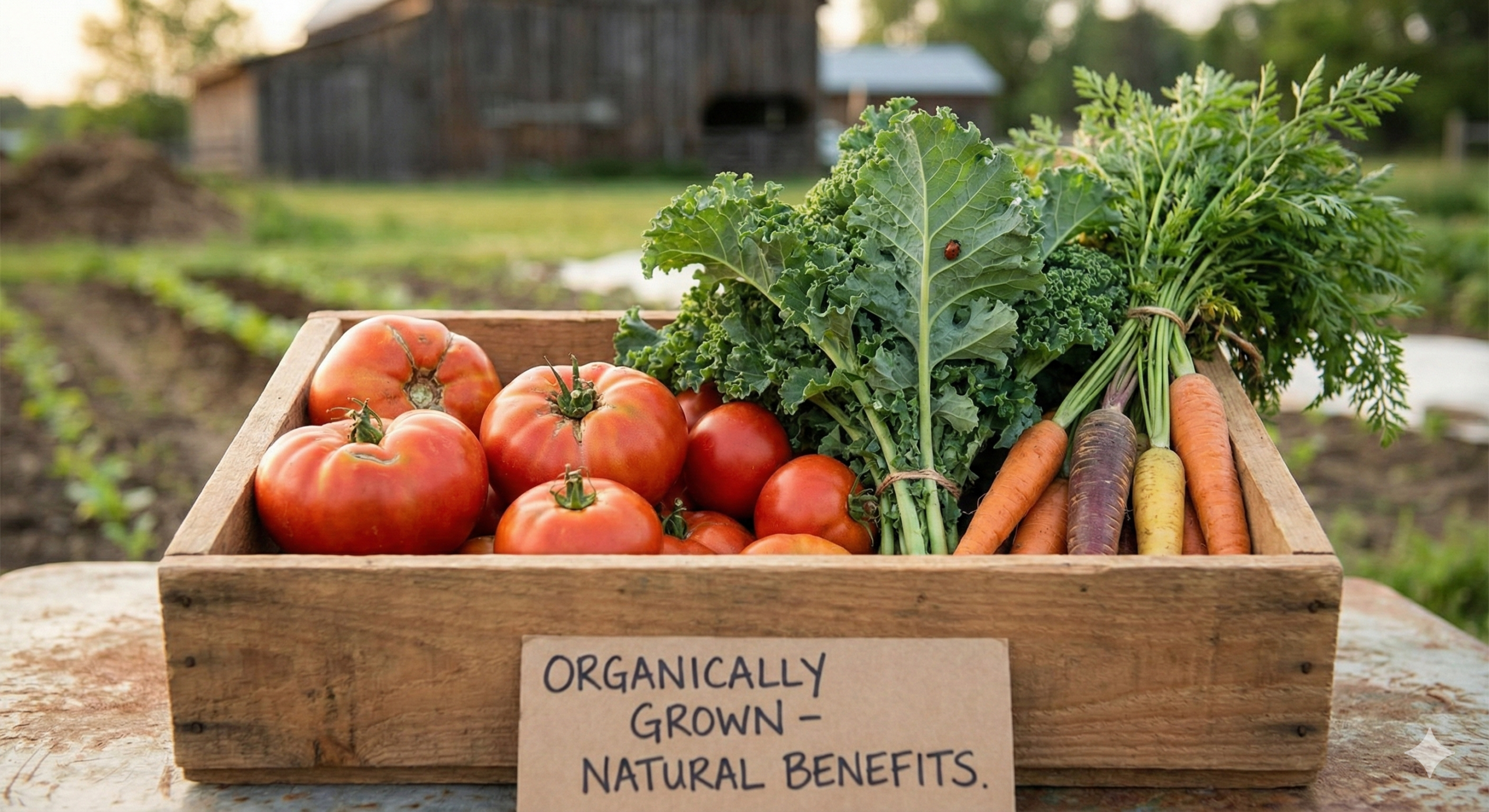
Consumers today are more aware of food safety and health. Organic produce is free from harmful chemical residues and is considered safer for consumption.
This leads to:
- Better market demand
- Premium pricing
- Increased consumer trust
Organic farming helps farmers connect directly with health-conscious buyers.
5. Environment-Friendly Farming Method
Organic farming supports sustainable agriculture by protecting ecosystems. It reduces air, water, and soil pollution caused by chemical runoff.
Key environmental benefits:
- Improved biodiversity
- Reduced carbon footprint
- Protection of pollinators like bees
This makes organic farming a future-ready farming system.
6. Natural Pest and Disease Control
Organic farming uses biological pest control methods such as neem-based products, beneficial insects, and crop rotation. These methods control pests without harming soil or human health.
Integrated natural pest management:
- Prevents pest resistance
- Maintains ecological balance
- Reduces crop loss
Farmers gradually notice fewer pest attacks as soil and crop health improves.
7. Better Long-Term Yield Stability
While organic farming may show slightly lower yields initially, yields stabilize and often improve over time. Healthy soil and balanced nutrition result in resilient crops that can withstand climate stress.
Organic farms are:
- Less affected by droughts
- More adaptable to climate change
- Sustainable over long periods
This stability ensures long-term farming success.
8. Higher Market Value and Profitability
Organic products often fetch higher prices in local and export markets. Many buyers are willing to pay more for chemical-free food.
Farmers benefit from:
- Premium pricing
- Direct-to-consumer sales
- Better brand value
With proper certification and marketing, organic farming becomes a profitable business.
9. Government Support and Certification Benefits
Many government schemes support organic farming through training, subsidies, and certification assistance. Programs like Paramparagat Krishi Vikas Yojana (PKVY) encourage farmers to adopt natural farming methods.
With certification, farmers can access:
- National and international markets
- Export opportunities
- Long-term financial support
Role of AspaGrow in Promoting Organic Farming
At AspaGrow, we believe awareness is the first step toward change. Through blogs, guides, and farming insights, we help farmers understand organic farming benefits and how to adopt natural methods successfully.
Our goal is to support farmers in building sustainable, profitable, and eco-friendly farms.
Frequently Asked Questions (FAQs)
Q1. What are the main benefits of organic farming for farmers?
Organic farming offers multiple benefits to farmers, including improved soil health, reduced input costs, and long-term sustainability. By avoiding chemical fertilizers and pesticides, farmers protect beneficial soil microorganisms and improve soil fertility naturally. Organic methods also reduce dependency on costly external inputs, as many organic fertilizers and pest control solutions can be prepared on the farm itself. Over time, this leads to stable yields, healthier crops, and better profit margins, making organic farming a reliable choice for long-term agricultural success.
Q2. Why are more farmers shifting from chemical farming to organic farming?
Many farmers are shifting to organic farming due to rising costs of chemical fertilizers, declining soil quality, and health concerns. Continuous chemical use damages soil structure and reduces crop resilience. Organic farming restores soil balance, improves water retention, and produces safer food. Additionally, growing consumer demand for chemical-free produce and government support for organic practices are encouraging farmers to adopt natural farming methods for sustainable income and environmental protection.
Q3. Does organic farming give lower yields compared to conventional farming?
In the initial transition period, organic farming may show slightly lower yields as the soil recovers from chemical dependency. However, once soil health improves, yields become stable and often comparable to conventional farming. Over time, organic crops develop stronger root systems and better resistance to pests and climate stress. This results in consistent production, lower risk of crop failure, and improved long-term productivity for farmers.
Q4. Is organic farming profitable for small and marginal farmers?
Yes, organic farming can be highly profitable for small and marginal farmers. It reduces the need for expensive chemical inputs and allows farmers to use locally available organic materials. Organic produce often fetches premium prices in local and urban markets, increasing income. With proper crop planning, certification, and direct marketing, small farmers can achieve better profitability and financial stability through organic farming.
Q5. How can farmers start organic farming successfully?
Farmers can start organic farming by gradually reducing chemical inputs and introducing organic practices such as composting, crop rotation, and natural pest control. Soil testing helps in understanding nutrient needs, while government programs provide training and financial support. Learning from successful organic farmers and platforms like AspaGrow also helps farmers adopt the right techniques and avoid common mistakes, ensuring a smooth transition to organic farming.
Conclusion
Organic farming is not just a trend—it is a necessity for the future of agriculture. With rising costs, climate challenges, and health concerns, farmers are naturally shifting toward organic methods that protect soil, reduce expenses, and ensure stable income.
By adopting organic farming, farmers invest in long-term productivity, environmental safety, and consumer trust. With platforms like AspaGrow guiding and educating farmers, the journey toward natural farming becomes easier and more rewarding.