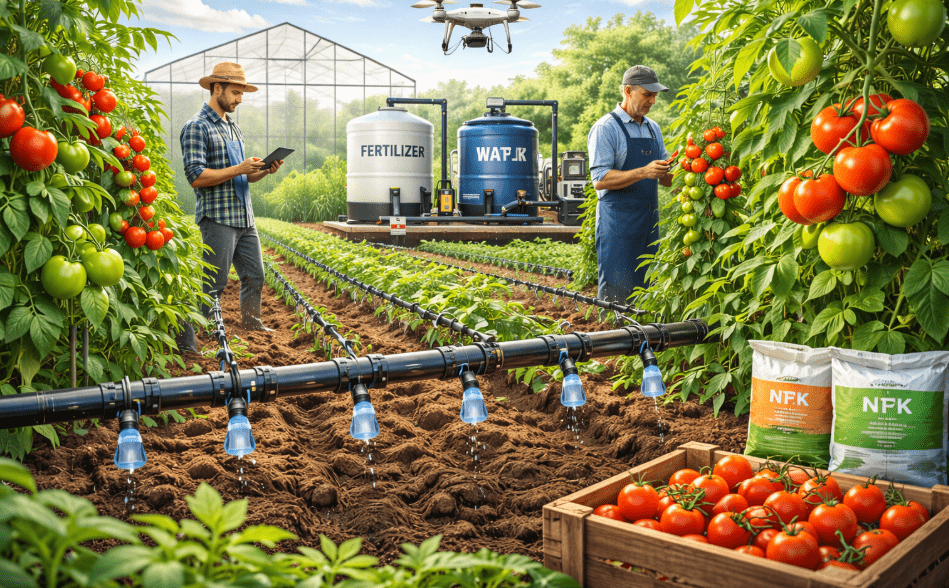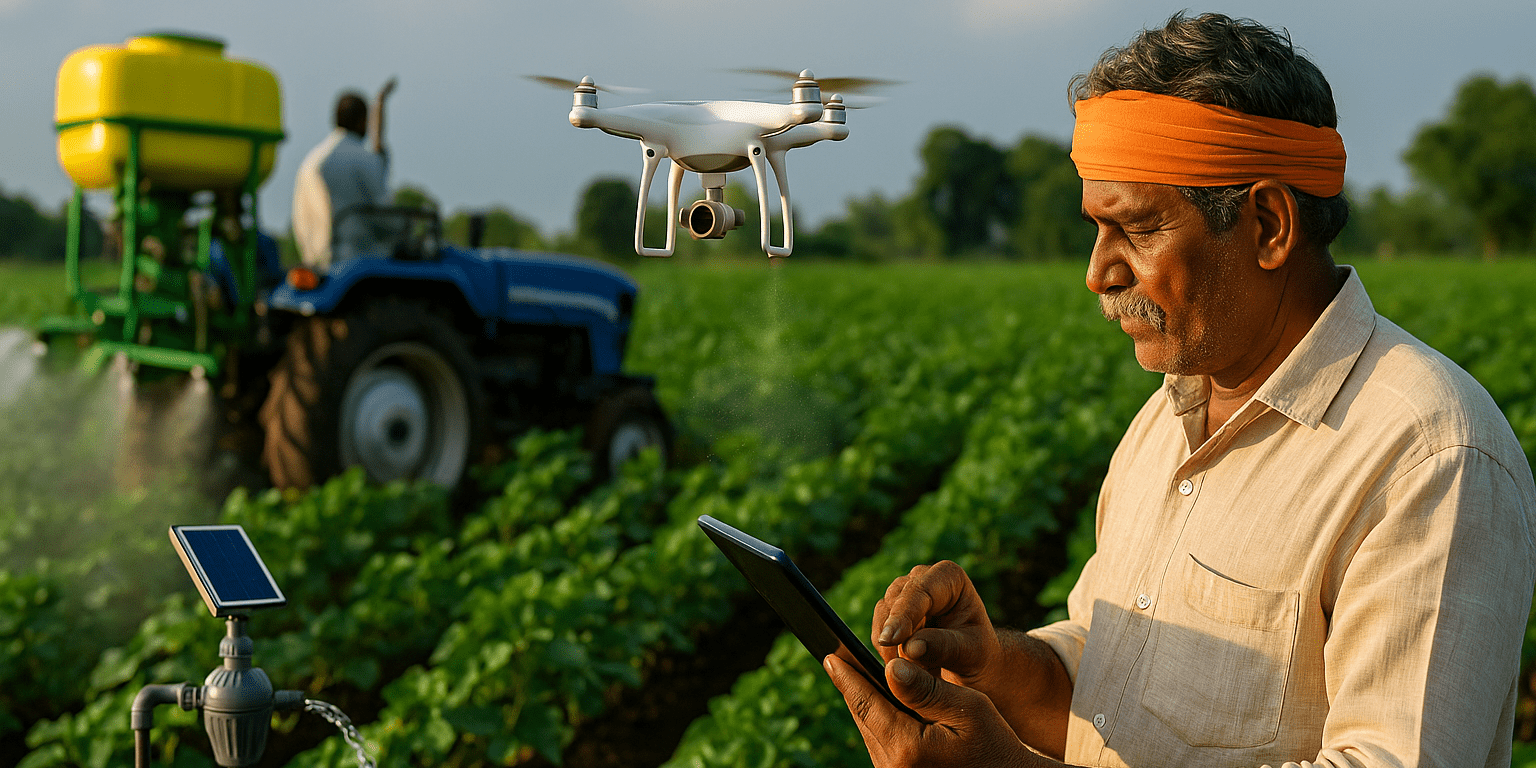
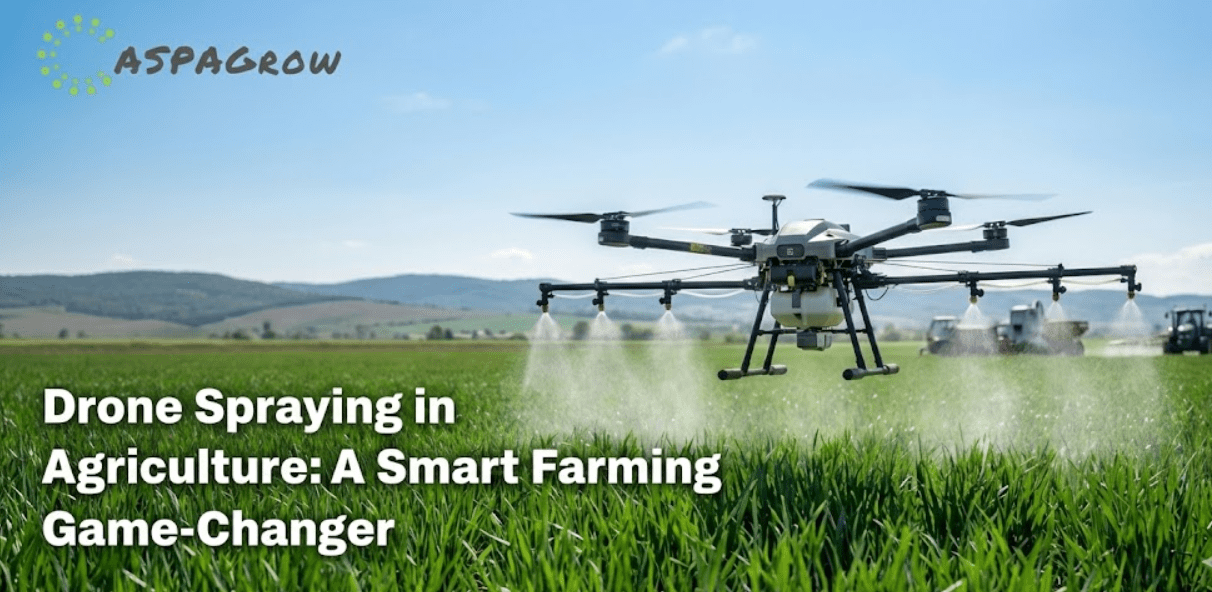
Agriculture is no longer limited to traditional tools and manual work. Today’s farming is moving toward technology, automation, and precision. One of the most exciting developments in modern agriculture is the use of drones. In recent years, drone spraying in agriculture has become a trending solution for spraying pesticides, fertilizers, and micronutrients in a fast and accurate way.
Farmers face many challenges such as labor shortages, rising cost of chemicals, crop diseases, and time pressure during peak seasons. Spraying is one of the most time-sensitive activities in farming because late spraying can lead to major crop loss. This is where drones are proving to be highly useful.
At AspaGrow, we focus on spreading awareness about smart farming technologies that make agriculture easier and more profitable. Drone spraying is not just a modern trend—it’s becoming a practical solution for increasing productivity while keeping farming sustainable.

What Is Drone Spraying in Agriculture?
Drone spraying in agriculture means using unmanned aerial vehicles (UAVs) to spray farm inputs like:
- pesticides and insecticides
- fungicides for crop diseases
- fertilizers and micronutrients
- bio-solutions in organic farming
These drones are equipped with:
- a chemical tank
- high-quality nozzles
- GPS navigation
- sensors and automated control system
Farmers can operate drones using remote control or mobile apps. Many agricultural drone services also provide trained pilots who spray on behalf of farmers.
Drone spraying supports precision farming, because it ensures that chemicals are applied evenly and in the right quantity.
Why Farmers Are Turning Toward Drone Spraying
Earlier, spraying was mostly done manually or with tractor sprayers. But these methods have limitations:
- manual spraying takes time and labor
- tractor sprayers are difficult in waterlogged fields
- tall crops like sugarcane make entry hard
- chemical exposure is risky for farmers
That’s why drone spraying in agriculture is becoming popular.
Drones can cover the field quickly, spray evenly, and work in areas where tractors cannot reach. They also reduce human exposure to toxic chemicals, improving safety.
Top Benefits of Drone Spraying in Agriculture
1) Faster Spraying and Time Savings
One of the biggest advantages of drones is speed. A drone can cover several acres in a short time, much faster than manual spraying. This is especially helpful during pest attacks or fungal infections when quick action is necessary.
During critical crop stages, spraying delay can reduce yield significantly. Drone spraying helps farmers avoid such losses
2) Precision Spraying with Less Wastage
Drone spraying in agriculture offers accurate and uniform spraying. Drones use controlled nozzle systems that spray in the correct pattern.
This reduces:
- chemical wastage
- over-spraying in one area
- under-spraying in another
Precision spraying ensures better pest control, healthier crops, and improved yield quality.
3) Lower Input Costs Over Time
Many farmers think drones are expensive. But when you look at the long-term, drones help save money because:
- less chemical wastage
- reduced labor cost
- fewer repeat sprays
- better crop protection
Drone technology improves efficiency, which makes spraying cost-effective over time.
4) Reduced Labor Dependency
Labor shortage is increasing in many farming regions. Finding workers during peak seasons has become difficult. Drone spraying solves this issue because it requires minimal manpower.
One drone with a trained operator can complete spraying work that would normally take many workers.
This is why drone spraying is perfect for modern farms.
5) Better Farmer Safety
Traditional spraying exposes farmers to harmful pesticides and fumes. Many farmers suffer from skin allergies, breathing problems, and long-term health issues due to regular chemical exposure.
Drones reduce direct contact with chemicals because spraying is done remotely. This improves farmer safety and reduces health risks.
6) Ideal for Tall Crops and Hard-to-Reach Areas
Certain crops like:
- sugarcane
- maize
- banana plantations
- cotton
make spraying difficult using manual methods or tractor sprayers.
Drone spraying can easily cover tall crop fields without damaging plants. It also works well in:
- uneven terrains
- hilly areas
- waterlogged fields
7) Supports Climate-Smart and Sustainable Agriculture
Drone spraying reduces chemical wastage and improves water use efficiency in spray solutions. It also reduces tractor movement, lowering fuel use and carbon emissions.
Drone spraying is a climate-smart agriculture practice, supporting sustainable farming.
How Drone Spraying Works (Step-by-Step)
At AspaGrow, farmers often ask how drones actually spray in fields. Here’s the simple process:
- Field Mapping – Drone operator maps farm boundaries using GPS.
- Chemical Mixing – Inputs are mixed in proper dose.
- Drone Setup – Tank is filled, nozzle settings are adjusted.
- Flight Planning – Drone is set to cover field lines systematically.
- Spraying Operation – Drone sprays with uniform pattern.
- Monitoring – Operator monitors battery, spray flow, and wind conditions.
Most drones can spray 8–12 acres per hour depending on drone size and field conditions.
Where Drone Spraying is Useful
Drone spraying works best in:
- pest outbreak conditions
- large farms needing quick spraying
- cotton, paddy, wheat spraying
- spraying micronutrients
- organic farming bio-spray applications
It is also useful in government-supported spraying programs.
Drone Spraying in India: Market Trend and Growth
Drone spraying is growing rapidly in India due to:
- government support for drones
- custom hiring rental models
- availability of drone service providers
- rising adoption of precision farming
The future of agriculture drone technology looks promising, especially for states focusing on modern mechanization.
Cost of Drone Spraying in Agriculture
Drone spraying cost depends on:
- crop type
- field size
- chemical used
- location
- drone capacity
Usually, drone spraying service charges are calculated per acre. Many farmers find it affordable, especially when compared to labor-intensive spraying.
Also, rental drone spraying services are increasing, making it easier for small and marginal farmers.
Challenges and Limitations
Drone spraying also has challenges:
- battery time limitations
- high initial drone purchase cost
- need for skilled operator
- regulatory rules and permissions in some areas
- wind conditions affecting spray drift
However, these challenges are gradually being addressed with training and improved drone systems.
Role of AspaGrow in Promoting Smart Farming
At AspaGrow, we guide farmers by sharing practical knowledge on:
- how drone spraying works
- when to use drone spraying
- benefits vs cost comparison
- smart farming tools and techniques
Our goal is to help farmers adopt technology in a simple and profitable way.
FAQs | Drone Spraying In Agriculture
Q1. What is drone spraying in agriculture and how is it different from normal spraying?
Drone spraying in agriculture is the use of drones to spray pesticides, fertilizers, and micronutrients over crops. Unlike manual spraying, drones cover more area in less time and provide precision spraying with less chemical wastage. Drone spraying is also safer because farmers are not directly exposed to harmful chemicals. It is a modern method that supports smart farming and helps improve crop protection efficiently.
Q2. Is drone spraying in agriculture safe for crops and farmers?
Yes, drone spraying is safe for crops and farmers when done correctly. Drones follow controlled spray patterns and apply the right dosage evenly. Farmers stay at a distance, reducing chemical exposure and health risks. Drone spraying also prevents crop damage because drones fly above crops without entering the field like tractors. That’s why drone spraying is considered a safer solution for modern agriculture.
Q3. How much does drone spraying cost per acre in agriculture?
The cost of drone spraying in agriculture depends on crop type, field size, and location. Typically, service providers charge per acre and the cost may vary based on chemical type and drone capacity. Many farmers find drone spraying affordable because it saves labor cost, reduces chemical wastage, and avoids repeated spraying due to uneven application. Rental services also make it accessible for small farmers.
Q4. Which crops are best suited for drone pesticide spraying?
Drone pesticide spraying works best for crops like cotton, paddy, wheat, maize, sugarcane, banana plantations, and vegetables. It is especially useful for tall crops and dense crop fields where manual spraying is difficult. Drone spraying also helps during pest outbreaks when fast action is required. Many farmers use drones for micronutrient spraying and disease control to improve crop yield and quality.
Q5. How does AspaGrow help farmers understand drone spraying technology?
AspaGrow helps farmers understand drone spraying in agriculture by sharing easy blogs, guides, and smart farming insights. The platform explains how drones work, their benefits, cost factors, and best practices for use. AspaGrow promotes modern farming technology in a farmer-friendly way so farmers can adopt innovations confidently and improve their farm productivity.
Conclusion
Drone spraying in agriculture is truly a smart farming game-changer. It saves time, improves precision, reduces labor dependency, and protects farmer health. Drones help farmers spray crops quickly and efficiently, ensuring better pest and disease control while reducing wastage.
As smart agriculture continues to grow, drone technology will become an essential part of modern farming. With awareness and guidance from platforms like AspaGrow, farmers can confidently adopt drone spraying and improve their productivity and long-term farming success.