Farming has never been easy, but in recent years it has become even more challenging. Weather has become unpredictable, pest attacks are happening suddenly, input costs are rising every season, and labour availability is becoming a major issue. In this situation, farmers need more than traditional experience—they need smart farming solutions that reduce risk and improve productivity.
This is where AI in Agriculture is making a strong impact. Artificial intelligence is no longer only for big cities or corporate offices. Today, AI is being used in farming fields to help farmers make better decisions. From detecting diseases early to saving water, AI is slowly becoming a powerful support system for modern agriculture.
At AspaGrow, our mission is to educate and guide farmers with future-ready farming knowledge. This blog will explain what AI in agriculture is, how it works, and why it is becoming one of the biggest game-changing technologies in farming.
What Is AI in Agriculture?
AI in Agriculture refers to using artificial intelligence tools and systems to assist farming operations. AI uses:
- machine learning (learning patterns from data)
- sensors and IoT devices
- satellite or drone images
- weather information
- farm records and real-time field data
AI systems analyze this data to provide suggestions, alerts, and predictions. This helps farmers take action at the right time, reduce waste, and increase crop yield.
In simple words: AI makes farming more accurate, timely, and efficient.

Why Farmers Need AI Today
Earlier, farming decisions were based on experience, weather observation, and community advice. But today, multiple problems are happening together:
- Climate change causing irregular rainfall
- Heat stress damaging crops
- Water shortage affecting irrigation
- Increased pest resistance due to pesticide overuse
- Fertilizer price increases
- Labour shortage in villages
Farmers are expected to handle these challenges while still producing high yield. That’s why AI in agriculture is needed—to reduce uncertainty and guide better decisions.
11 Powerful Ways AI in Agriculture Helps Farmers
Let’s understand how AI is actually helping farmers on the ground.
1) AI Crop Monitoring (Early Crop Health Check)
One of the biggest uses of AI in agriculture is crop monitoring. AI tools can monitor:
- plant growth
- crop stress
- nutrient deficiency
- water stress
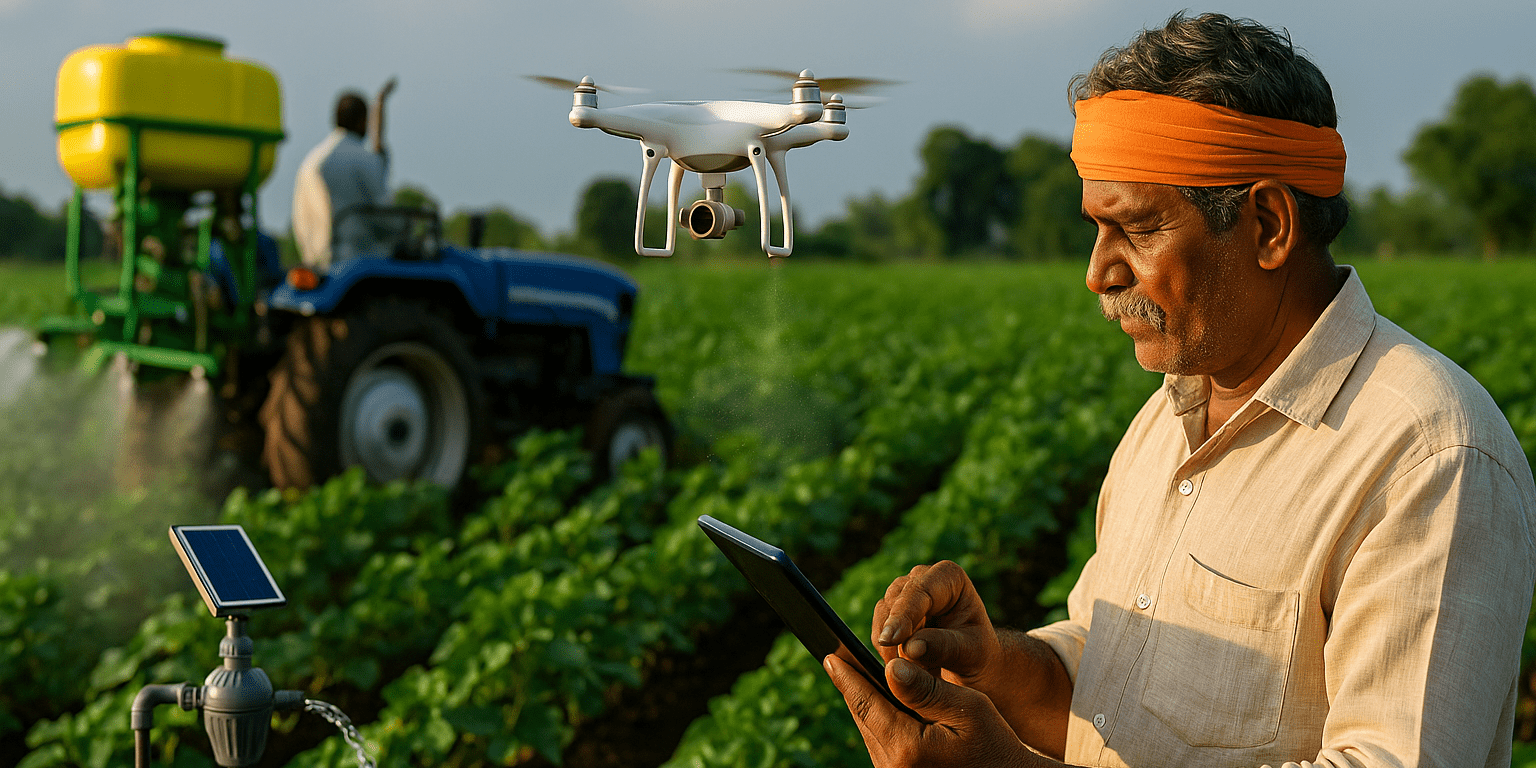
This monitoring can happen through:
- satellite images
- drone imaging
- in-field sensors
AI analyzes crop patterns and identifies which part of the field needs attention. Farmers can take early steps before damage becomes serious.
✅ Result: healthier crops + higher yield
2) AI Pest Detection (Stop Loss Before It Starts)
Pest attacks are one of the biggest reasons for crop loss in India. Many farmers detect pest attacks only after severe damage is visible. But AI in agriculture provides early warning systems.
AI pest detection uses:
- camera images (phone photos)
- disease pattern recognition
- weather-pest prediction models
Farmers receive alerts like:
“Pest risk is high in your area this week.”
✅ Result: timely spray + reduced crop los
3) AI Disease Identification Through Mobile Apps
Many mobile apps now help farmers click a photo of a leaf and detect:
- fungal disease
- bacterial infection
- nutrient deficiency
AI compares symptoms with large databases and gives suggestions in seconds.
This is extremely helpful for farmers who do not have easy access to agriculture experts.
✅ Result: early treatment + better yield
4) AI Weather Forecasting & Field Alerts
Weather is unpredictable now. Traditional forecasts are often too general. AI-based agriculture forecasts provide:
- crop-specific alerts
- village-level prediction
- rainfall probability
- heatwave warnings
- storm alerts
AI helps farmers plan:
- sowing
- irrigation
- spraying
- harvesting
✅ Result: less risk + better planning
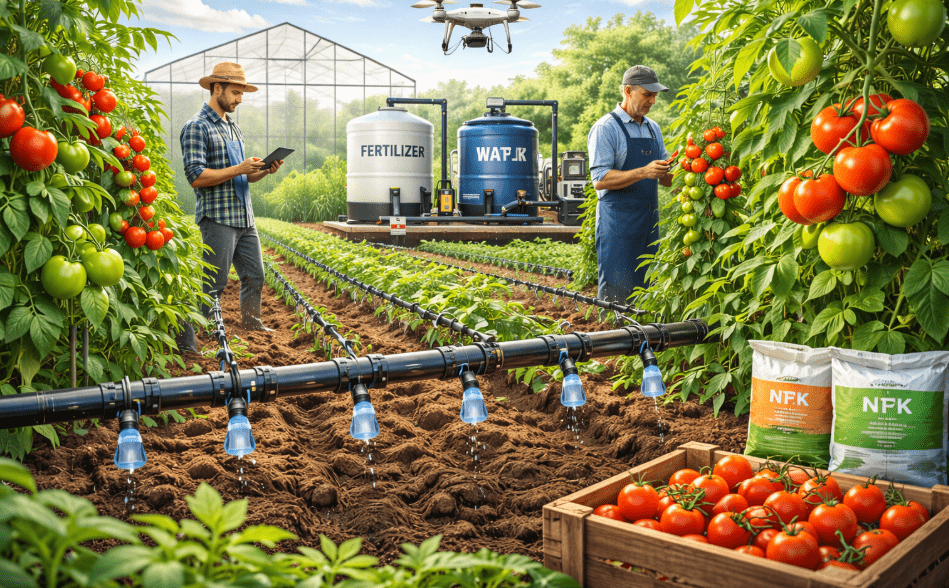
5) AI Irrigation Management (Save Water, Save Money)
Water is becoming expensive and scarce. AI in agriculture supports smart irrigation using:
- soil moisture sensors
- weather prediction
- crop growth stage data
AI systems recommend:
- how much water to apply
- when to irrigate
- best irrigation time
This avoids overwatering and reduces electricity consumption.
✅ Result: water saving + improved crop health
6) AI-Based Fertilizer Recommendation (No More Guesswork)
Many farmers apply fertilizer like:
- “more urea = more yield”
But this causes: - nutrient imbalance
- soil damage
- low flowering
- pest attraction
AI helps by analyzing:
- soil test report
- crop requirement
- previous nutrient usage
Then it recommends:
- exact fertilizer dose
- right time to apply
- split application plan
✅ Result: lower cost + balanced nutrition
7) Precision Farming with AI (Input Only Where Needed)
Precision farming means applying inputs only where required, not everywhere equally.
AI helps in:
- mapping soil variation
- identifying weak zones
- recommending input correction
Example:
- One part of the field needs potassium
- Another needs micronutrients
AI creates a zone-based plan.
✅ Result: less waste + more yield
8) AI Machinery & Automation
Modern machinery is also becoming smarter with AI:
- self-driving tractors
- autonomous sprayers
- robotic weeders
- smart harvesters
AI allows machines to:
- avoid obstacles
- follow accurate field routes
- operate efficiently
This reduces labour dependency and improves timely operations.
✅ Result: faster farming + less labour stress
9) AI Yield Prediction (Know Output Before Harvest)
AI can predict crop yield based on:
- crop health
- rainfall
- temperature trend
- soil condition
- disease risk
This helps farmers:
- plan storage
- plan labour
- plan selling strategy
✅ Result: better market planning + higher profit
10) Market Demand & Price Forecasting
Some AI systems analyze market data and predict:
- demand for certain crops
- expected price fluctuation
- best selling period
This helps farmers avoid selling at low price.
✅ Result: smart selling + stable income
11) AI Advisory Services (Farmer Support 24/7)
AI-based advisory platforms provide guidance on:
- crop choice
- pesticide schedule
- fertilizer planning
- irrigation advice
Farmers can ask questions and get suggestions quickly.
At AspaGrow, we see this as a powerful tool because farmers need support not only in the office hours, but daily—early morning and late evening too.
✅ Result: confidence + better farm decisions
AI in Agriculture Practical for Indian Farmers?
Yes, AI is becoming practical because:
- smartphone usage is increasing
- digital agriculture programs are growing
- drone services are expanding
- AI apps are supporting local languages
Even small farmers can benefit through:
- service-based models (drone monitoring)
- government-supported digital farming
- shared technology platforms
AI in agriculture will not replace farmers.
It will support farmers.
Challenges of AI in Agriculture
AI has benefits, but farmers should also know the limitations:
1) Internet & Connectivity
Many rural areas still face network problems.
2) Training Needed
Farmers need basic training to use apps and sensors confidently.
3) Cost of Devices
Sensors and equipment can be costly without subsidies.
4) Data Accuracy
Wrong data input gives wrong recommendation.
But as technology improves and becomes affordable, these challenges will reduce.
AspaGrow and the Future of Smart Farming
At AspaGrow, we focus on educating farmers about:
- AI in agriculture
- modern machinery
- smart irrigation
- soil health management
- sustainable agriculture
We believe the future of farming is technology + sustainability + farmer awareness. AI is one of the strongest pillars of that future.
Conclusion
AI in Agriculture is transforming farming into a smarter, more efficient, and more profitable activity. AI tools help farmers monitor crops, detect pests early, save water, apply fertilizer correctly, and plan better for weather and market conditions.
In the coming years, AI will become as important as tractors and irrigation systems. Farmers who understand and adopt AI gradually will reduce farming risks and improve productivity.
For more smart farming guidance, farmers can follow platforms like AspaGrow, which share agriculture innovations in simple language for real farming benefits.