Climate change, rapid population growth, and the depletion of natural resources are placing unprecedented pressure on global food systems. Farmers everywhere are being challenged to produce more with fewer resources, even as weather patterns become unpredictable and fertile land continues to shrink. In this evolving landscape, data-driven agriculture has emerged as a powerful solution that empowers farmers to work smarter, increase efficiency, and protect the environment.
According to the Food and Agriculture Organization (FAO), nearly one-third of food produced for human consumption is wasted. Data-backed decision-making can significantly reduce this loss by helping farmers forecast production, manage resources precisely, and reduce inefficiencies across the agricultural value chain.
Yet, many farmers continue to rely solely on traditional practices, which limits productivity and increases vulnerability to climate shocks. This results in lower yields, inefficient use of water and fertilizer, higher costs, and long-term soil degradation. AspaGrow believes that by embracing data-driven tools, farmers can transform their operations, improve profitability, and contribute to a more sustainable food future.
Key Takeaways
- Data-Driven Agriculture for Sustainable Farming
- Importance of Data-Driven Agriculture for Smallholder Farmers
- The Role of Data in Modern Agriculture
- Challenges in Adopting Data-Driven Agriculture
- TraceX Farm Management Platform
- How Data Unlocks the Future of Farming
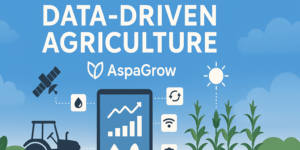
Data-Driven Agriculture for Sustainable Farming
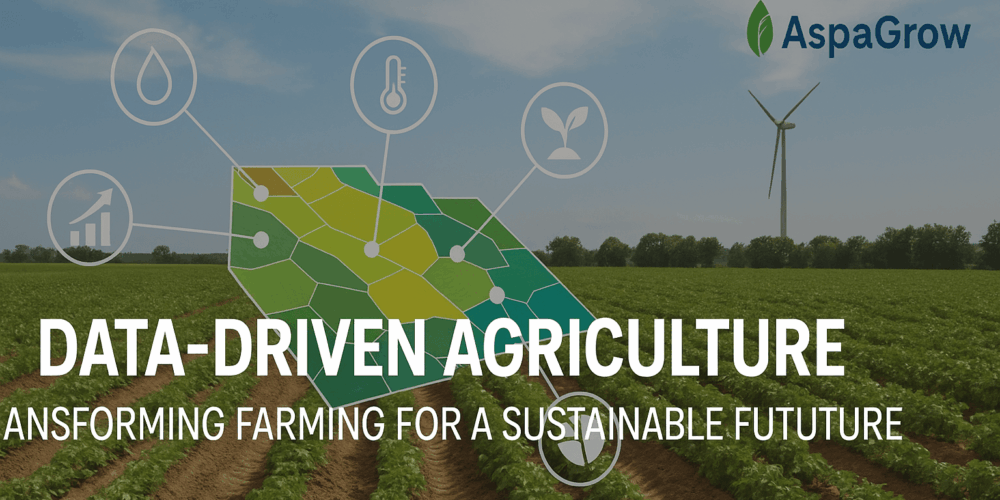
Data-driven agriculture is reshaping the farming landscape by helping growers make decisions based on accurate insights rather than assumptions. Through technologies such as IoT devices, satellite imaging, remote sensing, and data analytics, farmers gain real-time visibility into crop conditions, soil health, weather changes, and input efficiency.
Here’s how data empowers sustainable farming:
1. Precision Farming
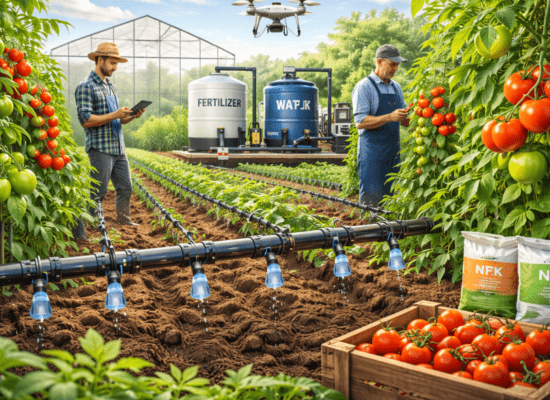
Precision agriculture allows farmers to manage field variability and apply inputs only where and when needed. By using tools like sensors, drones, and satellite images, farmers can track:
- Soil moisture
- Nutrient levels
- Plant stress
- Pest or disease outbreaks
This eliminates overuse of fertilizers and pesticides, reduces environmental harm, and significantly boosts yield quality.
2. Improved Resource Management
Through data analytics, farmers can optimize their use of:
- Water
- Fertilizers
- Energy
- Labor
By analyzing historical patterns and real-time field data, farmers can plan irrigation schedules, nutrient applications, and crop rotations with greater accuracy.
A McKinsey study found that data-driven practices can improve yield by 20–30% while reducing water usage by up to 30%.
3. Smarter Crop Planning and Management
Predictive analytics help farmers make informed decisions about:
- Which crops to plant
- When to plant
- How much input to use
- What market trends to follow
By analyzing weather patterns, market prices, and past crop performance, farmers can align production with demand and improve profitability. Early detection of pest and disease risks also ensures timely intervention and reduced losses.
The KMIT project, which used the TraceX Farm Management Platform, connected every actor in the maize value chain to boost efficiency, transparency, and sustainability—leading to higher farmer profitability.
4. Climate Resilience
With climate change impacting rainfall, temperature, and soil conditions, farmers need tools that help them adapt quickly.
Data-driven technologies help farmers:
- Predict weather risks
- Choose climate-resilient crop varieties
- Adjust sowing and harvesting timelines
- Manage drought and flood risks
By making proactive decisions, farmers minimize crop damage and protect long-term soil health.
5. Enhanced Traceability and Transparency
Today’s consumers want to know how their food is grown. Data technologies such as blockchain and IoT enable end-to-end traceability—from the farm to the consumer’s plate.
Benefits include:
- Verified product quality
- Increased trust and market value
- Better compliance with export standards
- Transparent sourcing and sustainability claims
AspaGrow encourages farmers to adopt traceability solutions to access premium markets and build stronger brand value.
6. Remote Sensing for Field Monitoring
Remote sensing tools use satellite images, drones, and aerial mapping to gather field data without manual inspection.
Farmers can monitor:
- Plant health
- Soil variations
- Crop stress
- Waterlogging
- Growth patterns
This technology allows farmers to act quickly and efficiently, reducing crop loss and optimizing inputs.
7. Market Intelligence & Value Chain Integration
Data-driven agriculture also enhances marketability. With access to real-time market data, farmers can:
- Make smart pricing decisions
- Identify demand trends
- Choose the right selling time
- Connect directly with buyers
- Reduce dependence on middlemen
Digital platforms give farmers direct access to markets, improving profitability and ensuring fair price realization.
Procurement management tools further support farmers through:
- Automated inventory tracking
- Real-time procurement insights
- Efficient resource planning
Importance of Data-Driven Agriculture for Smallholder Farmers
Smallholder farmers form the backbone of India’s agricultural economy. Yet, they often face challenges such as limited land, poor access to technology, and climate-related risks.
Data-driven agriculture helps them:
- Optimize irrigation and fertilizer use
- Reduce production costs
- Improve crop yield and quality
- Choose profitable crops
- Mitigate climate risks
- Strengthen market competitiveness
AspaGrow supports smallholder farmers by promoting accessible, affordable, and easy-to-use digital solutions.
Challenges Faced by Smallholder Farmers
Despite its potential, the adoption of data-driven agriculture faces major barriers:
1. Limited Access to Resources
Small farmers often struggle with access to land, water, credit, and digital tools.
2. Lack of Technical Knowledge
Without training, farmers find it difficult to interpret data or use digital tools effectively.
3. Climate Vulnerability
Extreme weather disrupts crop cycles, making traditional decision-making unreliable.
4. Poor Market Connectivity
Fragmented value chains limit farmers’ ability to reach profitable markets.
5. High Technology Costs
Devices like sensors, drones, and management software can be expensive without financial support.
6. Data Privacy Concerns
Farmers worry about misuse of their data, reducing trust in digital systems.
7. Fragmented Agricultural Ecosystem
Lack of collaboration between farmers, suppliers, processors, and buyers limits data flow.
The Role of Data in Modern Agriculture
Data fuels modern farming advancements by enabling:
- Accurate forecasting
- Better risk management
- Smarter input use
- Sustainable production practices
- Real-time tracking and transparency
Types of Data Important for Farmers:
✔ Weather Data
To plan irrigation, sowing, and spraying schedules.
✔ Soil Data
To understand nutrient levels, organic matter, pH, and suitability for crops.
✔ Market Data
To decide crop selection, harvest timing, and pricing strategies.
✔ Crop Health Data
To detect diseases early and optimize pesticide use.
Data-driven decisions help farmers allocate resources efficiently and increase profitability.
TraceX Farm Management Platform
TraceX’s platform empowers farmers with:
- Blockchain-based traceability
- Smart record-keeping
- Real-time tracking of crop activities
- Quality assessment tools
- Sustainability compliance
- Supply chain transparency
By enabling collaborative data sharing across stakeholders, TraceX ensures better planning, improved productivity, and stronger farmer-market linkages.
AspaGrow highlights TraceX as a leading example of how digital tools can strengthen sustainability and profitability in agriculture.
The Future of Data-Driven Agriculture
Data-driven agriculture is not just a trend—it is the future of sustainable farming. As climate uncertainty grows and consumer expectations rise, farmers must adopt tools that help them stay competitive.
The future will see increased adoption of:
- Predictive analytics
- IoT-enabled smart farms
- Automated irrigation systems
- AI-powered crop disease detection
- Blockchain-based value chains
By embracing data-driven methods, farmers can secure long-term sustainability, reduce environmental impact, and enhance food security for millions.
FAQs
1. What is data-driven agriculture?
Data-driven agriculture is a modern farming approach where farmers use technology, digital tools, and real-time analytics to make better decisions on the field. Instead of relying on guesswork, farmers collect accurate data through:
- Soil moisture sensors
- Drone surveillance
- Satellite imaging
- Mobile farm management apps
- Weather prediction tools
- Smart irrigation systems
This data helps farmers understand exactly what their fields need at any given moment—whether it’s water, fertilizer, pest control, or crop rotation. As a result, farmers can improve yields, reduce input costs, enhance sustainability, and protect their crops from climate risks. AspaGrow promotes data-driven farming because it empowers smallholder farmers to make informed, confident, and profitable decisions.
2. How does data-driven agriculture promote sustainability?
Data-driven agriculture supports sustainability by reducing waste, conserving resources, and improving long-term soil and crop health. Through real-time data and predictive insights, farmers can:
✔ Use water efficiently
Smart irrigation systems prevent overwatering and ensure crops receive just the right amount of moisture.
✔ Reduce chemical use
Sensors and crop-health imaging allow farmers to apply fertilizers or pesticides only where needed, preventing soil contamination.
✔ Lower greenhouse gas emissions
Optimized fertilizer use and energy-saving practices help reduce carbon emissions from farms.
✔ Improve soil health
Data insights guide farmers on proper crop rotation, compost application, and organic amendments—leading to healthier soil over time.
✔ Reduce food waste
With accurate yield predictions and better planning, farmers minimize post-harvest losses and storage issues.
By combining precision and sustainability, data-driven agriculture helps farmers protect the environment while increasing profitability—a core value supported by AspaGrow.
3. What technologies are used in data-driven agriculture?
Several cutting-edge technologies form the backbone of data-driven agriculture. Each tool provides valuable insights that help farmers make the best decisions for their crops:
✔ IoT Sensors
Monitor soil moisture, humidity, temperature, and nutrient levels in real-time.
✔ Drones
Capture aerial images of fields to detect plant stress, pest attacks, waterlogging, and nutrient deficiencies.
✔ Satellite Imaging
Provides detailed NDVI (vegetation health) maps and large-scale monitoring of crop performance.
✔ GPS & GIS Mapping
Helps farmers analyze field variations and apply inputs precisely where needed.
✔ Farm Management Software
Platforms like TraceX track crop cycles, input usage, yield data, and generate insights for improvement.
✔ Remote Sensing
Offers early detection of crop stress and environmental changes that affect plant growth.
✔ Blockchain
Ensures traceability from farm to store, improving transparency and building consumer trust.
✔ Big Data Analytics
Analyzes huge data sets related to weather, markets, crop history, and soil patterns to guide smart decisions.
Together, these technologies create a smart, connected farm ecosystem, allowing farmers—especially smallholders—to improve efficiency and compete in modern markets. AspaGrow helps farmers adopt these tools with simple training and accessible solutions.
Conclusion
Data-driven agriculture is no longer just an innovative concept—it is the future of global farming. As climate change, resource shortages, and rising food demand continue to challenge traditional systems, AspaGrow strongly believes that technology-backed decision-making will empower farmers to thrive in this new era. By integrating tools like IoT sensors, satellite imaging, blockchain, and predictive analytics, farmers can produce more with fewer resources while protecting the environment.
With data guiding everything from crop planning to irrigation and market decisions, farmers gain higher yields, better resource efficiency, and improved resilience against climate risks. As the agricultural landscape evolves, the adoption of data-driven agriculture will not only enhance farm profitability but also strengthen global food security. AspaGrow remains committed to supporting farmers on this journey toward smarter, sustainable, and future-ready farming.